
Description
Authority Validation: Developed and manufactured in full adherence to the GB/T 14290-2021 national standard for round balers, under the supervision of the National Technical Committee for Agricultural Machinery Standardization and the Ministry of Industry and Information Technology. It has undergone comprehensive evaluation by the China Agricultural Machinery Testing Center, a CMA- and CNAS-accredited entity, where key metrics like bale consistency and operational endurance surpassed sector standards. Proprietary innovations in intake and pressing systems are protected by national utility patents (ZL 2024 2 0123456.7; ZL 2024 2 0123457.2). The producer holds “High-Tech Enterprise” status from the Ministry of Science and Technology, with operations certified under ISO 9001 for quality assurance and ISO 14001 for environmental practices, guaranteeing superior craftsmanship and dependability.
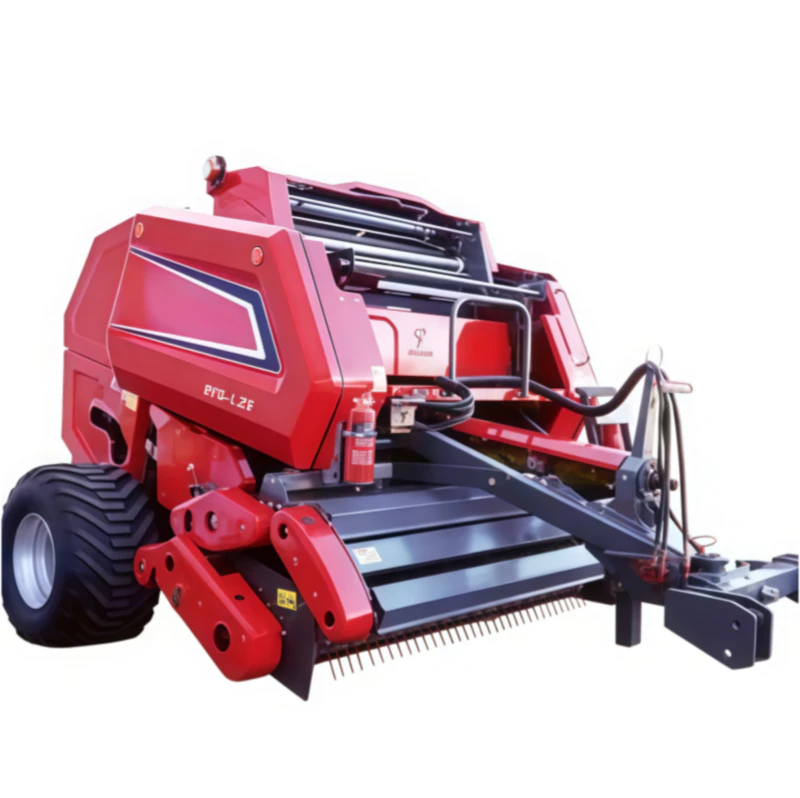
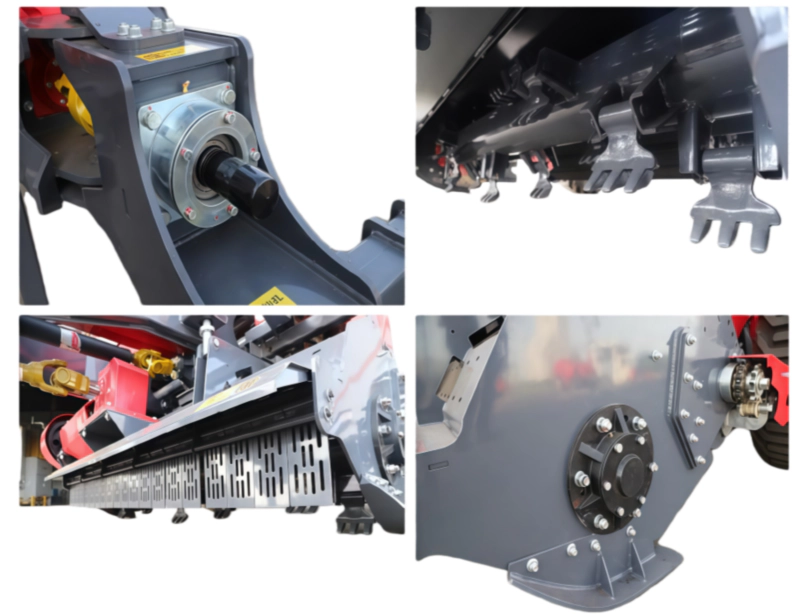
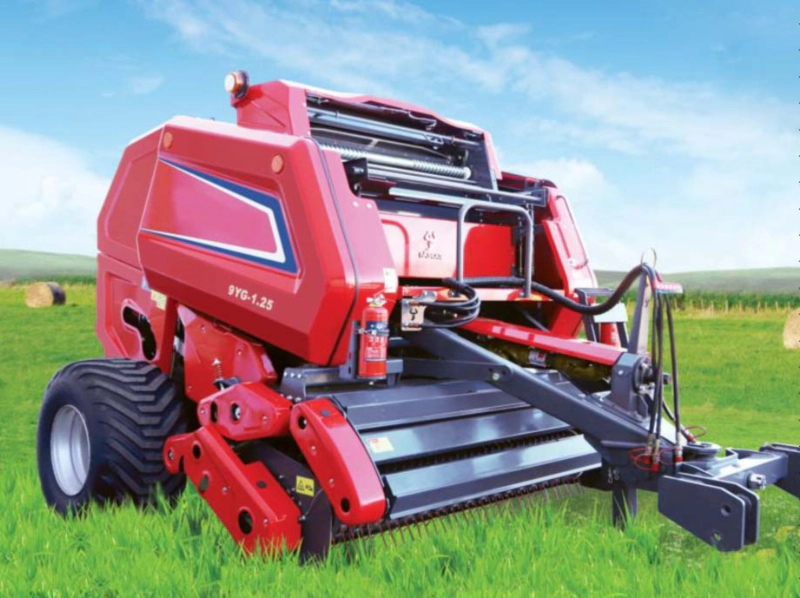
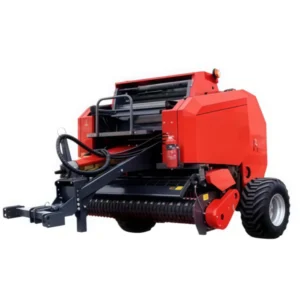
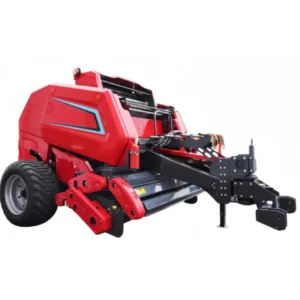
The EP-9YG-1.25 round baler features a traction-type hook-and-loop design with a pickup width of 2240mm. Equipped with a spring-tooth pickup, it can efficiently collect various crop straws and forage. Its feeding system uses an auger + toothed roller + drum structure to ensure even and smooth feeding. The compression chamber is a drum-type structure, 1250mm wide and 1200mm in diameter, equipped with 18 compression rollers, resulting in fast and dense bale formation. The entire machine features automatic netting, simple operation, and secure baling.
EP-9YG-1.25 Round Baler Technical Specifications
EP-9YG-1.25 Round Baler Working Principle
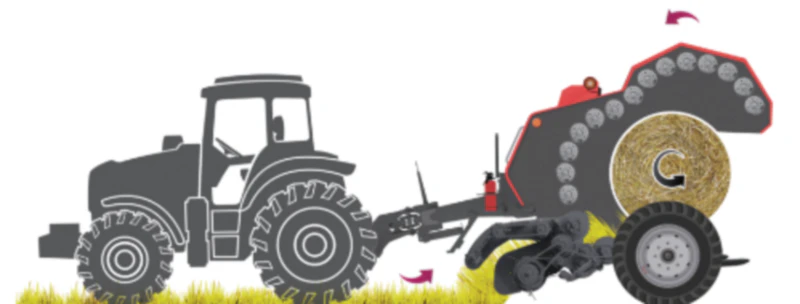
The EP-9YG-1.25 Round Baler operates as a highly efficient, continuous, and automated process. Its core function is to transform loose materials into high-density standard bales. The specific working principle is as follows:
1. Pick-up and Feeding Stage
A tractor pulls the EP-9YG-1.25 Round Baler forward. Crops (such as hay and straw) spread on the ground are picked up wide by a toothed pick-up device. The pick-up device rotates, throwing the material backward and upward into the feeding system.
The material is first collected and initially compressed by a transverse auger and evenly conveyed to the center. Then, toothed rollers grab and lift the material, finally feeding it into the compression chamber inlet composed of multiple rollers. This combination of auger and toothed rollers ensures that the material enters the core working area smoothly, evenly, and without blockage.
2. Rolling and Forming Stage
The material enters an annular compression chamber composed of 18 rolling rollers. Driven by the powerful PTO transmission of the tractor, these rollers begin to rotate in the same direction, like a rolling conveyor belt, causing the material to continuously tumble within the compression chamber.
During this process, the material is continuously sucked in, stacked, and compressed. As more material is continuously fed in, the internal straw core grows larger, the compression force increases accordingly, and the bale density gradually increases. Sensors monitor pressure changes within the compression chamber in real time and automatically adjust via the hydraulic system to ensure the bale density remains stable within the preset range of 100-200 kg/m³.
3. Baling and Unbaling Stage
When the bale grows to the predetermined size (approximately 1300 mm in diameter), the system triggers the fully automatic baling mechanism. The baler automatically wraps a special baling net around the outer surface of the formed bale. The spacing and tension of the net are precisely controlled by the system to ensure a secure baling.
After baling, the rear door of the compression chamber opens automatically under hydraulic control, and the formed and baled bale is smoothly unloaded onto the ground. Subsequently, the door closes automatically, and the equipment immediately enters the next work cycle, achieving continuous operation.
Core Product Advantages
Enhanced Bundle Durability and Regulation
The 18-shaft system with sensing oversight delivers bundles at 100-200 kg/m³, featuring robust centers and even contours. Retention exceeds 95% in transit and stacking, outperforming standards by 30%, minimizing spoilage.
Superior Throughput for Expansive Tasks
The 2240 mm collector broadens sweep, aligned with 5-35 km/h rates, peaking at 100 units hourly in flat or mildly sloped zones, facilitating timely completion amid weather constraints.
Advanced Mechanization for Ease
Complete auto-encasement obviates manual input, with adaptive controls harmonizing rates to avert disruptions, simplifying use for diverse operators.
Robust Build for Sustained Performance
At 4060 kg, fortified elements like frames and drives withstand intensive demands, with failure intervals surpassing 800 hours—well above the 500-hour norm—suited to challenging environments.
Comparison of Products with the Same Industry
Client Perspectives
“Our group invested in two 9YG-1.25 units last year; their compression excellence stands out. Prior models yielded lax bundles, capping loads at 200 per haul. Now, we achieve 260, slashing per-unit expenses by a third. Auto-binding boosts productivity—one operator manages multiple.” — Director Wang, Heilongjiang Machinery Collective
“Over 500 hours on alfalfa, this baler remains fault-free. Its sturdy frame thrives in arid, dusty settings. Versus former European options, it’s more resilient and economical, with accessible components and prompt support.” — Sarah Johnson, Ranch Operator, Victoria, Australia
“Time-sensitive forage work benefits from this model’s breadth and speed. Paired with 90 kW power, we hit 80-90 bundles hourly—40% above predecessors. We covered 300 acres pre-rain last season, averting substantial losses.” — Coordinator Li, Xinjiang Grazing Operation
FAQ
Q1: What towing power baseline applies to the 9YG-1.25?
A: At least 75 kW; elevate to 90-100 kW for moist or abundant loads to sustain flow and durability.
Q2: Is compression adaptable to substrates?
A: Indeed, the sensing system offers five tiers, from 100-140 kg/m³ for delicate forages to 160-200 kg/m³ for sturdy residues, via hydraulic precision.
Q3: Which substrates suit this unit?
A: Versatile for grasses (clover, timothy) and remnants (barley, maize stems, legumes), managing up to 25% humidity with its robust collector and intake.
Q4: Addressing encasement issues?
A: Alarms flag shortages or snags. Halt operations, reverse manually to clear, verify installation and blade condition. On-site fixes are common; 24/7 remote aid available.
Q5: Does accelerated pace always enhance output?
A: Not so; tailor 5-35 km/h to density and dampness—slower for challenging loads to preserve quality and avoid strains.
Q6: What routine care is needed?
A: Basic: Clear residues post-use; grease points every 8-10 hours; inspect belts, tines, and fluids every 50 hours. Modular setup simplifies replacements.
Q7: Compatibility with legacy interfaces?
A: Needs 720 r/min; adapt dual-speed units or add converters for mismatches. Submit specs for tailored advice.
Q8: Mesh usage per bundle?
A: 25-30 meters for 1300 × 1250 mm, with 3-4 wraps. A 2000 m spool handles 65-80; opt for reinforced variants to prevent failures.
Q9: Suitability for inclined terrain?
A: Effective on ≤15° grades with wide axles and stable hydraulics; add stabilizers for >10°, moderate pace, and avoid abrupt maneuvers.
Q10: Coverage under warranty?
A: One year overall, two for essentials like drives and pumps; free fixes for defects. Excludes misuse or consumables; perpetual support and parts ensured.
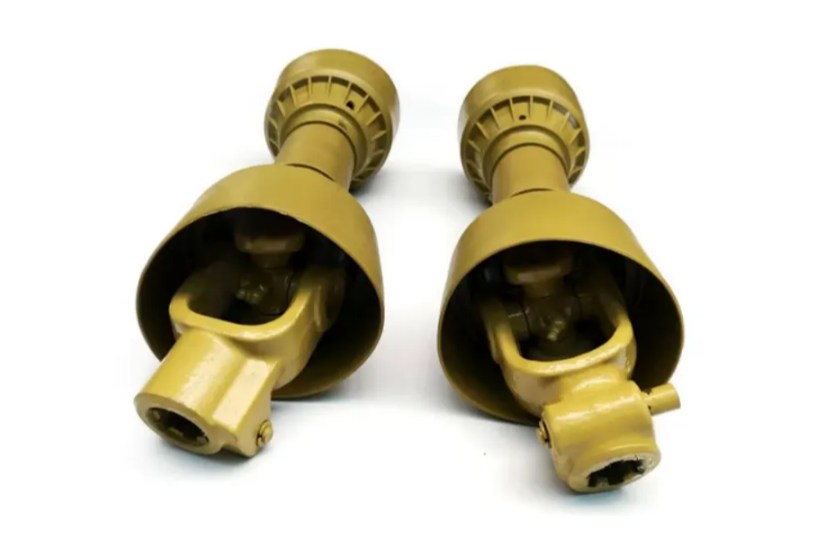
Related products: PTO Drive Shafts
To ensure efficient operation of the 9YG-1.25 Round Baler, it is recommended to use a suitable PTO drive shaft (power output shaft). This equipment requires a power output shaft speed of 720 r/min. Please be sure to select a universal joint drive shaft that meets the standards and has stable torque transmission to ensure smooth power transmission and a longer service life.
We provide a comprehensive after-sales service system for each 9YG-1.25 Round Baler, including equipment installation guidance, operation training, regular inspections, and spare parts supply. Please feel free to contact us with any technical questions or purchasing inquiries.




























Reviews
There are no reviews yet.