
A practical guide to round bale storage management — comparing outdoor and indoor storage systems, quantifying dry matter losses by storage method, optimising bale placement and orientation, and selecting the right covering system for your climate and feed value requirements
Producing a well-formed, correctly moistured round bale is only half the job. The other half is storing it in a way that preserves the nutritional value that the crop management and baling operation invested in producing. Round bale storage losses are among the most consistently underestimated costs in livestock farming and hay contracting — surveys in temperate and humid climates regularly document total dry matter losses of 20–35% between field baling and feeding, losses that represent a direct reduction in the return from every hour of mowing, tedding, raking, and baling investment.
The range of storage outcomes is wide. A net-wrapped round bale stored on a well-drained gravel pad under a simple cover in a temperate climate may lose 5–8% of its dry matter over six months. The same bale stored directly on soil in a wet climate without any covering may lose 25–40% over the same period. The difference between these outcomes is not the quality of the original bale — it is the storage system and the management decisions applied to it.
This article provides a systematic comparison of round bale storage options — outdoor versus indoor, uncovered versus covered, net wrap versus stretch film, and the bale placement and orientation practices that minimise losses regardless of which primary storage system is used. The framework applies across hay, silage, and straw bales, with specific notes on the different storage requirements of each.
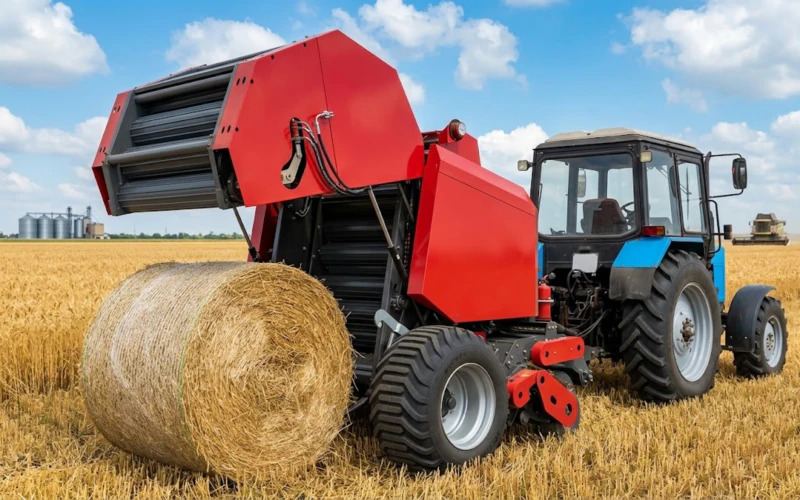
Where Dry Matter Losses Occur: The Three Loss Pathways in Round Bale Storage
Round bale storage losses occur through three distinct pathways, each driven by different physical and biological mechanisms and each addressable by specific management interventions.
Pathway 1: Ground Contact Losses
Moisture wicking upward from wet soil into the base of the bale produces a zone of high moisture in the bottom 150–300 mm of the bale that supports active mould growth throughout the storage period. Ground contact losses account for 30–50% of total storage losses in wet climates and are the single largest controllable loss pathway in outdoor storage.
Solution: Gravel pad, pallets, tyre rows, or any barrier preventing soil-bale contact.
Pathway 2: Weather Surface Losses
Rain, snow, and dew penetrate the outer layer of an uncovered bale, creating a weathered zone of moulded, discoloured hay. The depth of this weathered zone depends on rainfall intensity, bale density, and binding type. In temperate climates with 600–900 mm annual rainfall, an uncovered net-wrapped bale stored for six months develops a 75–150 mm weathered outer layer representing 10–20% of the bale volume.
Solution: Covering — stretch film, tarps, or permanent structure.
Pathway 3: Initial Heating Losses
All bales undergo some degree of initial aerobic heating in the first 7–21 days after baling as residual plant respiration and microbial activity consume plant sugars. These losses occur regardless of storage system and are primarily controlled by baling moisture — bales at 14% moisture lose 1–3% dry matter in initial heating; bales at 20% moisture lose 5–12%. Storage system affects subsequent losses but cannot reverse initial heating losses that have already occurred.
Solution: Bale at below 18% moisture (covered in a separate article).
Outdoor vs Indoor Storage: The True Cost Comparison
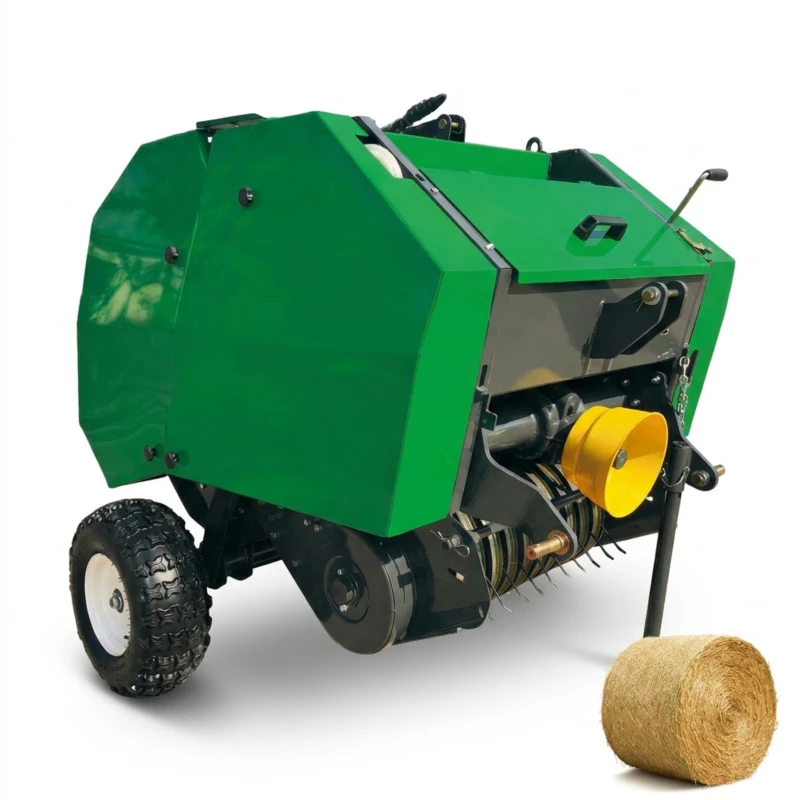
Outdoor Storage: Low Capital, Higher Losses
Outdoor storage without any covering is the lowest-capital option and is appropriate in two scenarios: dry climates where annual rainfall is below 400–500 mm and the storage period is less than three months; and for straw bales (lower inherent feeding value) where the cost of losses is proportionally less significant than for high-value alfalfa or grass hay.
In wet temperate climates (600–1,200 mm annual rainfall), outdoor uncovered storage of round hay bales for six months or more consistently produces total losses of 25–40% dry matter — meaning that between one quarter and two fifths of the dry matter produced at baling is lost before feeding. At £200/tonne dry matter value, a 30% loss on a 500-bale storage of 400 kg bales represents a loss of £12,000 in feed value — several times the cost of a basic covered storage solution.
Indoor Storage: High Capital, Minimal Losses
Hay stored in a properly designed barn with adequate ventilation consistently achieves total storage losses of 3–6% dry matter over a six-month period, regardless of climate. The barn eliminates both the ground contact and weather surface loss pathways simultaneously, leaving only the initial heating losses that are controlled by baling moisture.
The capital cost of permanent barn storage is justified by the loss reduction in any climate where outdoor losses significantly exceed indoor losses — which in practice means any operation storing more than 200–300 bales per year in a climate with above 500 mm annual rainfall. The break-even calculation: divide the annual value of dry matter losses avoided (outdoor loss % minus indoor loss % multiplied by the total hay value) by the annual capital and maintenance cost of the barn. If this ratio exceeds 1.5, the barn is economically justified.
Covered Outdoor Storage: The Practical Middle Ground
For most operations, the practical optimum between zero-capital outdoor storage and high-capital permanent barns is a covered outdoor storage system: bales stored on a gravel or hardcore pad with a simple pole-frame tarpaulin or UV-stabilised plastic cover above them. This system eliminates or significantly reduces both ground contact and weather surface losses at a capital cost of 10–25% of permanent barn construction. Storage losses in a well-managed covered outdoor system in a temperate climate are typically 6–12% dry matter — well above indoor barn losses but well below uncovered outdoor losses.
Bale Placement, Orientation, and Stacking: Practices That Reduce Losses in Any Storage System
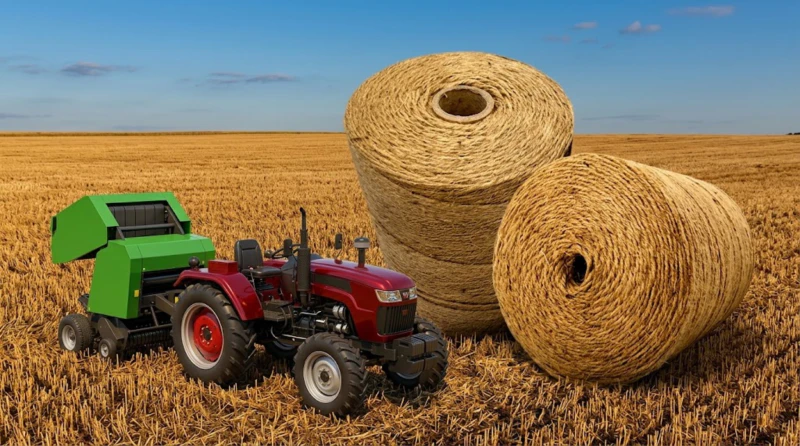
Bale Orientation: Flat Ends Vertical vs Curved Surface Down
Round bales have two possible storage orientations: standing on their flat circular end (axis horizontal, curved surface exposed on top and sides) or lying with their curved surface on the ground (axis vertical, flat ends exposed on sides). Consistent research demonstrates that storage with the bale’s axis horizontal — curved surface on top — produces lower weathering losses than axis-vertical orientation, because the curved top surface sheds rainfall more effectively than a flat end.
In practice, most round bales are naturally ejected from the baler lying on their curved surface (axis horizontal) and should be stored in this orientation wherever the storage site permits. Moving bales to axis-vertical orientation for stacking compactness trades storage loss reduction for space efficiency — a trade-off that may be justified in space-constrained barn storage but is rarely worth the additional handling cost in field storage.
Row Spacing and Air Gap Management
When bales are stored in rows with their curved surfaces touching — the common field storage arrangement for transport efficiency — the contact point between two bales creates a moisture trap. Rain water runs down the curved surface of each bale and accumulates at the contact point, producing a zone of prolonged high moisture that accelerates localised mould development at the contact area of both bales.
The solution is to maintain a minimum 300–600 mm air gap between rows (not between bales within a row, but between parallel rows of bales) so that air can circulate between the row faces and moisture can evaporate from the bale sides rather than accumulating. Within a row, bales can remain touching as long as the row orientation runs north-south to maximise solar exposure on both sides during the day.
Site Selection and Ground Preparation
Storage site selection is the highest-leverage single decision in outdoor bale storage management. Bales stored on a south-facing (northern hemisphere) or north-facing (southern hemisphere) slope drain and dry faster after rain than bales in a valley bottom or flat low-lying area. A site that is accessible by tractor in wet conditions — so bales can be fed out without churning the surrounding soil into mud — significantly reduces the practical storage period losses because it allows the earliest bales to be fed first rather than leaving them in storage while the site becomes inaccessible.
Net Wrap vs Stretch Film: Which Outer Covering Best Protects the Stored Bale
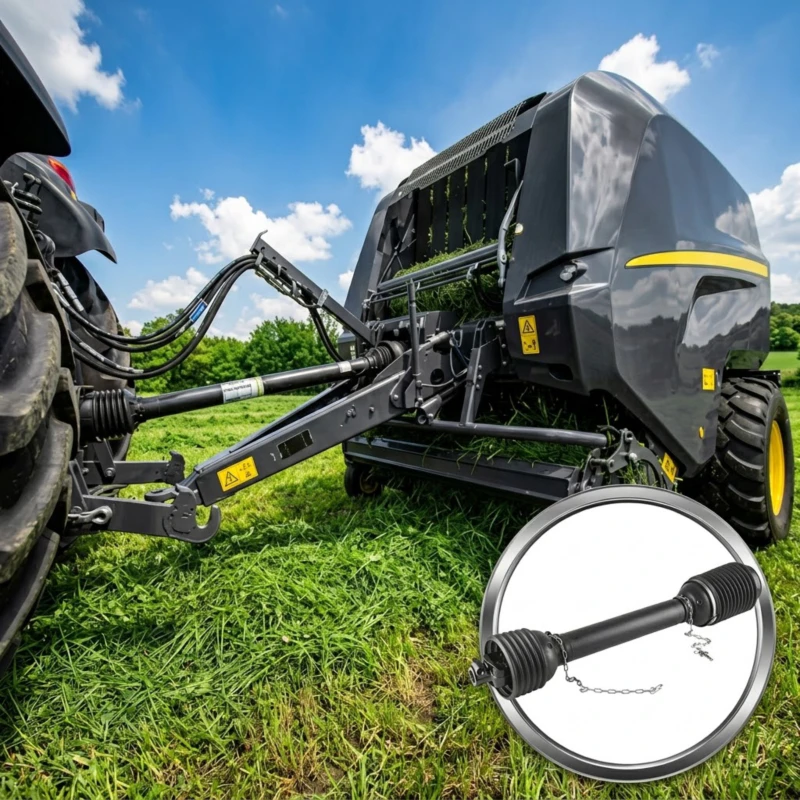
The outer covering applied to a round bale — either at the baler (net wrap or twine) or subsequently in a wrapping operation (stretch film) — determines both the immediate weather resistance of the stored bale and, for silage bales, the quality of the anaerobic fermentation that preserves the crop through the storage period.
Net Wrap Alone: Weather Resistant but Not Airtight
Net-wrapped bales have significantly better weather resistance than twine-tied bales in outdoor storage because the continuous net surface compresses the outer crop layer, reducing rain penetration depth. However, net wrap is not airtight — it is a mesh structure that allows air movement through the outer crop layer. For dry hay storage, this air permeability is not a problem — the bale needs no fermentation protection, and the slight air movement actually helps the bale continue drying if stored at borderline moisture. For silage, net wrap alone is completely inadequate — the aerobic conditions within a net-wrapped bale prevent the fermentation that silage preservation requires.
Stretch Film (Silage Wrap): Airtight Preservation
Stretch film wrapping applied by a separate bale wrapper machine creates an airtight seal around the net-wrapped bale, excluding oxygen from the bale interior and creating the anaerobic conditions necessary for lactic acid fermentation to preserve the crop as silage. A minimum of six layers of stretch film (typically applied as three passes of a double-overlap wrap) is required for adequate oxygen exclusion — fewer layers allow oxygen ingress through micro-perforations in the film, producing aerobic spoilage zones rather than clean fermentation.
Wrapped silage bales should be inspected weekly for film damage — bird pecks, vermin chewing, and mechanical damage from bale handlers or fencing are the most common film integrity failures. Repair any damage immediately with purpose-made silage repair tape — a hole left unrepaired for more than 24–48 hours allows aerobic spoilage to establish in the damaged zone, which can spread through 10–20% of the bale interior before the bale is fed out.
Dry Matter Loss Comparison by Storage System
| Storage System | DM Loss (3 months) | DM Loss (6 months) | Climate Suitability |
|---|---|---|---|
| Indoor barn, ventilated | 2–4% | 3–6% | All climates; highest capital cost |
| Covered outdoor (gravel pad + tarp) | 4–7% | 6–12% | Temperate, wet climates; moderate capital |
| Net-wrapped, outdoor, elevated | 5–10% | 8–16% | Dry climates; not suitable for wet winters |
| Net-wrapped, outdoor, soil contact | 8–15% | 15–25% | Poor practice in any climate above 400 mm rain |
| Twine-tied, outdoor, soil contact | 12–20% | 25–40% | Unsuitable for hay storage exceeding 8 weeks in any wet climate |
| Silage wrap (6+ layers film) | 3–6% | 5–10% | All climates; specifically for high-moisture crop |
Storage Requirements by Crop Type: Hay, Silage, and Straw
Grass and Alfalfa Hay
Highest value per tonne of any round bale product; justifies the highest investment in storage infrastructure. Target: indoor barn or covered outdoor storage on a gravel pad. Minimum standard for any climate above 600 mm annual rainfall: net-wrapped bales elevated off soil on gravel or pallets. Storage period over six months without covering in a temperate climate is economically indefensible at current hay prices.
Round Bale Silage
Requires airtight stretch film wrapping and storage in a location where film damage can be monitored and repaired. Store on a firm, level surface — uneven ground causes bales to roll and stress the film at contact points. Inspect weekly. Do not store next to hedges or fences where vermin can access film. Wrapped silage bales should ideally be fed within 12–18 months of wrapping — film UV degradation eventually compromises the seal on bales stored beyond this period outdoors.
Cereal Straw
Lower feed value per tonne than hay; the economics of high-investment storage are less compelling. Net-wrapped straw bales stored outdoors on a well-drained site with bales off the soil can achieve acceptable storage outcomes over 3–4 months in most climates. For longer storage or for straw committed to a biomass supply contract with moisture specifications, covered storage or indoor storage is required to maintain the moisture specification through the supply period.
Cotton Stalk and Biomass Bales
Cotton stalk bales destined for biomass combustion require moisture below 20% at delivery. Outdoor storage without covering in humid climates re-wets bales above this threshold within 4–8 weeks of baling. Either deliver direct from the field within 2–4 weeks, or store under cover to maintain moisture specification. Biomass contracts typically allow for seasonal delivery — plan the storage system accordingly rather than assuming direct-from-field delivery throughout the season.
Câu hỏi thường gặp
Does bale density affect storage losses, or is it only about the storage system?
Bale density has a meaningful effect on storage losses, though smaller than the effect of the storage system itself. Higher-density bales lose less dry matter from weather surface penetration because the compressed outer crop layer allows less rapid moisture penetration per unit of rainfall. Studies comparing low-density (100 kg/m³) and high-density (160 kg/m³) round bales of the same crop stored under the same outdoor conditions consistently show 3–6 percentage points lower dry matter loss in the denser bales over a six-month period. This is the secondary reason to maintain good bale density — beyond the transport efficiency and handling advantage, denser bales simply store better outdoors. However, a high-density bale stored on wet soil will still lose significantly more dry matter than a lower-density bale stored in a barn — the storage system effect is larger than the density effect at all practical density ranges.
What is the cheapest effective way to prevent ground contact losses in outdoor storage?
The cheapest effective solution is old vehicle tyres placed flat under each bale as a base, with the bale resting on two tyres spaced to support the outer thirds of the bale diameter. Tyres cost nothing or next to nothing as agricultural waste, provide approximately 150 mm of ground clearance that prevents direct soil-bale moisture contact, and allow air circulation under the bale base. Studies comparing tyre-elevated bales against soil-contact bales in humid climates consistently show 8–15 percentage points less dry matter loss in the tyre-elevated bales over a six-month storage period. The next step up in cost and effectiveness is a compacted gravel or hardcore pad that allows all-weather vehicle access to the storage area and provides a firm, free-draining surface under the full bale footprint. The pad pays back its construction cost in reduced storage losses within one to two storage seasons in most wet climates.
How do I calculate whether a hay barn is economically justified for my operation?
Use this simple framework. Estimate your annual outdoor storage losses as a percentage of total hay stored (use 20–30% for uncovered outdoor storage in a temperate climate). Multiply this loss percentage by your total annual hay storage quantity in tonnes dry matter, then by the market value per tonne of your hay. This gives the annual value of dry matter losses in outdoor storage. Compare this against the annualised capital and maintenance cost of a barn — divide total barn construction cost by the expected barn life (typically 25–30 years) and add annual maintenance at 1–2% of capital cost per year. If the annual loss value is more than 1.5 times the annual barn cost, the barn pays for itself with a reasonable margin. For a 500-bale operation with 400 kg bales at £200/tonne DM with 25% outdoor losses, the annual loss value is approximately £10,000 — enough to justify a significant barn investment over a 25-year life.
Can I re-wrap a silage bale that has developed a hole in its film?
Small holes (punctures under 50 mm diameter) can be effectively repaired with purpose-made silage repair tape — apply at least 100 mm overlap beyond the hole on all sides, press firmly to exclude air, and monitor the repair site weekly. Larger holes or tears that suggest the film has been significantly compromised over a large area require a more significant intervention: either immediate feeding of the affected bale before aerobic spoilage extends, or re-wrapping the bale with at least four additional layers of stretch film applied by a bale wrapper. Re-wrapping is only effective if done within 24–48 hours of film damage occurring — a bale that has been exposed for longer than this may have established aerobic spoilage zones internally that re-wrapping cannot reverse. Re-wrapped bales should be fed as soon as practical after re-wrapping rather than returning to long-term storage.
Conclusion: Storage Investment Is Feed Value Investment
Every percentage point of dry matter loss in storage represents feed that was grown, cut, dried, and baled at a cost, and then lost before it reached an animal. In a wet temperate climate, the difference between a well-managed covered storage system and uncovered soil-contact outdoor storage can be 25 percentage points of dry matter — meaning that the well-managed system delivers the equivalent of 25% more hay from the same baling operation, without baling a single additional bale.
The investment in storage infrastructure — a gravel pad, a simple cover, or a permanent barn — is an investment in feed value preservation that pays back in reduced storage losses every season the storage system is used. For operations where hay is a primary farm income source or a critical livestock feed input, storage management is not an afterthought to baling — it is an equal partner in the return on the baling investment.
Round Balers for Quality Hay and Silage Production — Factory Direct from Balershay
We supply the full range of round balers from mini baler to commercial silage baler — including net wrap and twine models — for operations across every climate and scale. Visit balershay.com to explore our baler range, or contact our team for guidance on matching baler specification to your storage system and end market.