
Why Alfalfa Demands More Precision Than Any Other Hay Crop
Alfalfa is the highest-value forage crop in the world by dry matter nutritional density. It is also the most unforgiving to bale. The same leaves that carry 70 percent of the plant’s protein, digestible energy, and vitamin content are the first to shatter and fall when the stem moisture drops below a critical threshold, when the rake passes too fast, or when the baler pickup runs at the wrong speed for the windrow size. A badly timed baling operation on a premium alfalfa field can destroy USD 40 to USD 80 per ton of feed value in a single afternoon while the field still looks green and the bales still look full.
This guide covers the complete agronomic and mechanical interaction between alfalfa physiology, field drying conditions, raking practice, and baler settings. Every recommendation is grounded in the moisture and timing relationships that determine whether a bale grades as premium dairy feed or sells at commodity price.
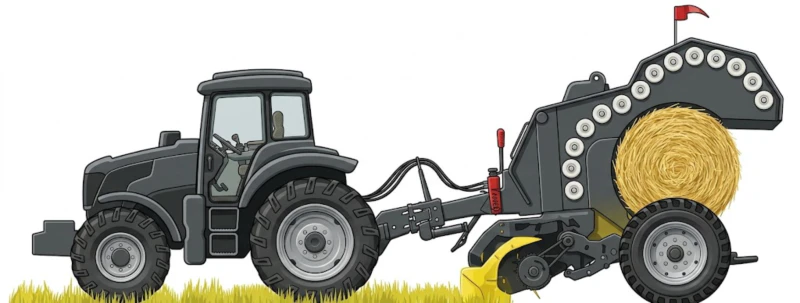
Round baler working principle — pickup tines, feed rotor, and bale chamber each interact with alfalfa differently depending on crop moisture
Understanding Alfalfa Drying Physiology: Stems and Leaves Do Not Dry Together
The single most important fact in alfalfa baling management is that alfalfa stems and leaves lose moisture at completely different rates. After cutting, alfalfa leaves — thin, small, and with high surface area relative to their mass — dry from field moisture of 75 to 80 percent down to 15 percent in eight to twelve hours under good drying conditions. The stems, which contain far more bound water in their vascular tissue, require 24 to 48 hours to reach the same moisture level.
This differential creates the fundamental tension in alfalfa baling. If you bale when stem moisture is safe for storage — below 18 percent — leaf moisture has often fallen to 10 to 12 percent. At that moisture level, alfalfa leaves are brittle. They shatter on contact with the pickup tines, the feed rotor fingers, and the bale chamber rollers. They fall through the pickup mechanism as dust and fragments rather than being incorporated into the bale. The field may appear full of windrows but the bales weigh less and test lower in crude protein than the standing crop suggested they would.
The opposite error — baling when leaves are still flexible but stems are still too wet — produces bales that heat internally during storage, promoting mold growth and reducing digestibility. Wet-baled alfalfa stored in tight stacks has caused barn fires from spontaneous combustion in extreme cases.
| Stem Moisture | Leaf Condition | Baling Decision | Risk |
|---|---|---|---|
| Above 25% | Flexible, intact | Do not bale | Heating, mold, fire risk |
| 20 – 25% | Slightly flexible | Acceptable for large round only with preservative | Moderate heating, reduced quality |
| 15 – 18% | Pliable, low shattering | Optimal baling window | Minimal — this is the target |
| 12 – 15% | Becoming brittle | Bale only in morning dew window | Moderate leaf shatter, 8 – 15% loss |
| Below 12% | Brittle, shatters on contact | Do not bale — wait for dew or irrigate windrow lightly | Severe leaf loss, 20 – 35% protein reduction |
The Morning Dew Window: Timing Baling Operations to Atmospheric Conditions
The most consistently productive alfalfa baling window in most climates is early morning, from approximately one hour after sunrise until mid-morning when ambient temperature rises above 25 degrees Celsius and relative humidity drops below 40 percent. During the early morning period, overnight dew re-wets the alfalfa leaf surface without significantly increasing stem moisture. This surface moisture makes leaves pliable enough to flex through the pickup and bale chamber without shattering, while the stems remain at or near the dry-down moisture achieved the previous afternoon.
The practical baling window in this condition is two to four hours. As the morning progresses and the sun heats the windrow surface, leaf moisture drops again. A skilled operator monitors this transition by rubbing a handful of leaves from the windrow between the palms — leaves that flex without crumbling are still in the workable window, leaves that produce a dry rustling sound or visible fragments are past it.
In arid climates where overnight dew does not occur — parts of the American Southwest, Central Australia, or the Middle East alfalfa production regions — the morning window does not exist in the same form. Operators in these environments must rely entirely on precise stem moisture measurement and often bale at night when ambient temperatures fall and relative humidity rises slightly. A digital hay moisture meter with a probe designed for windrow insertion is essential equipment in these conditions.
Raking Timing and Ground Speed: The Two Variables That Cause the Most Leaf Loss
Raking is the operation most likely to cause catastrophic alfalfa leaf loss, and it is entirely controllable. The two key variables are when you rake relative to crop moisture and how fast you drive through the field.
Raking alfalfa when stem moisture is below 40 percent causes significant leaf shatter regardless of ground speed or rake type. Research from multiple North American forage extension programs consistently shows that raking at stem moisture above 40 percent produces leaf loss of 3 to 7 percent of total dry matter. The same raking operation at stem moisture below 35 percent produces leaf loss of 12 to 22 percent. The difference in crude protein between a bale raked correctly and one raked dry is routinely 2 to 4 percentage points — the difference between a dairy-quality bale and a backgrounding bale.
Ground speed amplifies whatever leaf loss the moisture condition creates. A wheel rake operated at 8 km/h in correct moisture conditions produces acceptable leaf loss. The same rake at 12 km/h in correct moisture conditions doubles the mechanical leaf impact. In dry conditions, excessive ground speed is catastrophic. A practical rule for alfalfa: rake at half the speed that feels natural on grass hay, and slow down further if you see leaf material visible on the ground behind the rake.
| Rake Type | Leaf Loss at Correct Moisture | Leaf Loss Below 35% Stem Moisture | Notes |
|---|---|---|---|
| Wheel rake (finger wheel) | 3 – 7% | 14 – 22% | Most common; speed-sensitive |
| Rotary (parallel bar) rake | 4 – 8% | 16 – 24% | Higher bar impact on dry leaves |
| Side-delivery rake | 5 – 9% | 15 – 20% | Rolling action gentler than tine impact |
| Merge (wide-area) rake | 2 – 5% | 10 – 16% | Lowest leaf impact; best for premium alfalfa |
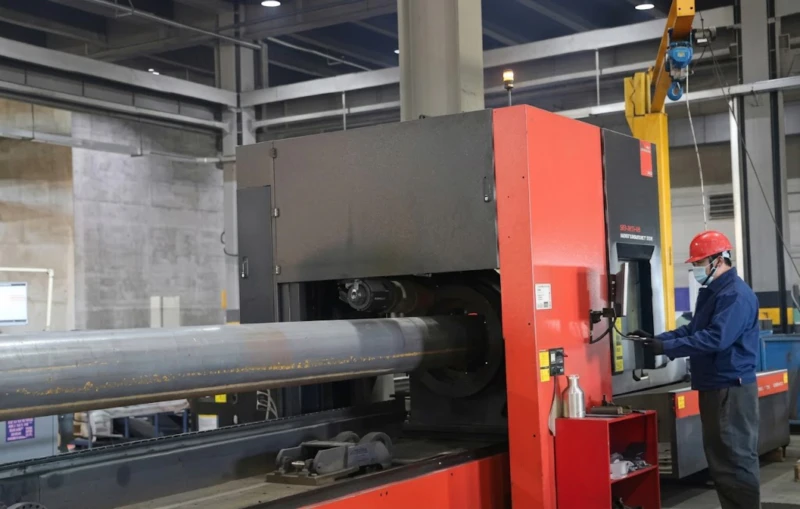
Factory production of round balers — pickup reel geometry and tine spacing are engineered specifically for gentle crop handling in high-value forage applications
Baler Settings for Alfalfa: Pickup Speed, Feed Rotor, and Bale Density
Once the field is raked and the moisture window is confirmed, the baler settings determine how much of the remaining leaf fraction survives the mechanical baling process. Three settings matter most: pickup reel speed, feed rotor speed or auger setting, and bale chamber density.
Pickup reel speed
The pickup reel should be set to the lowest speed that cleanly lifts the windrow off the ground at your operating ground speed. A reel running faster than necessary creates aggressive tine impact on the crop as it enters the pickup. For alfalfa, this means reducing ground speed before increasing pickup reel speed — a slow, steady pickup recovers more leaf than a fast reel chasing a fast tractor. Most manufacturers recommend a tine-tip speed of 1.5 to 2.0 times the ground speed of the tractor. At 6 km/h ground speed, tine tip speed should be in the range of 9 to 12 km/h.
Feed rotor speed and crop flow
The feed rotor moves crop from the pickup into the bale chamber. On most round balers this is a fixed-speed shaft running off the main gearbox output. What the operator controls is how much crop enters the rotor per unit time — which is effectively ground speed. Overfeeding the rotor with high ground speed creates a crop slug in the feed throat that the rotor must chop or force through, increasing mechanical leaf separation. A steady, moderate feed rate keeps crop flowing continuously without slugging. Reduce ground speed when the windrow is thick or the wind has blown multiple swaths together.
Bale density setting
Higher bale density requires the chamber to compress the crop more aggressively during the final stage of bale formation. For alfalfa at the lower end of the moisture window — 15 to 16 percent — use a moderate density setting rather than maximum. A very dense, hard alfalfa bale does improve storage efficiency and transportability, but the additional compression in the forming chamber causes more leaf fragmentation as the crop circulates in the drum before reaching the target density. For premium dairy alfalfa where crude protein is being sold at a premium per ton, a slightly softer bale that retains leaf is worth more than a dense bale with fractured leaf material.
Cut vs Non-Cut Baler Configurations: Does a Cutting Rotor Help or Hurt Alfalfa Quality?
Many round balers are available with an optional cutting rotor that chops crop into shorter lengths as it passes from the pickup into the bale chamber. For silage and high-moisture forage, cutting improves fermentation by breaking cells and increasing surface area. For dry alfalfa hay, cutting is counterproductive.
A cutting rotor running on dry alfalfa stems will cleanly sever the stems at the knife points, but it will also fragment attached leaves at every cut point. The shorter the cut length setting, the more knife passes per stem, and the more leaf fragmentation per bale. Research comparing cut and non-cut round baler configurations on alfalfa at 16 percent moisture consistently shows 3 to 6 additional percentage points of leaf loss with the cutting rotor engaged at standard cut lengths.
If your baler has a cutting rotor option, disengage it for dry alfalfa baling. Keep it available for silage or high-moisture baleage applications where the benefits outweigh the leaf impact. If your machine only offers a fixed cutting rotor with no disengagement option, compensate by baling at slightly higher moisture — 17 to 19 percent stem moisture rather than the 15 to 17 percent optimal for a non-cut baler.
Baler assembly and quality control — feed rotor geometry and knife configuration vary between models and directly affect alfalfa leaf retention
Using Hay Preservatives: When Propionic Acid Makes Baling Economics Work
Hay preservatives — most commonly propionic acid-based sprays applied at the baler pickup — allow alfalfa to be baled at higher moisture than would otherwise be safe for storage. A properly applied preservative treatment at the labeled rate allows baling at up to 25 percent moisture by suppressing the mold and bacterial activity that would otherwise cause heating and spoilage.
From a leaf loss perspective, preservatives are directly useful. By allowing baling at higher moisture, they expand the usable baling window into periods where leaf moisture is still above 15 percent and therefore less prone to shattering. An operation that would otherwise need to bale after 1:00 PM — when leaf moisture has dropped below 12 percent — can instead bale from 9:00 AM onward with preservative applied, capturing the entire morning window at better leaf condition.
The economics of preservative use depend on your hay value and your cutting schedule. At USD 200 per ton alfalfa, a 10 percent dry matter loss from leaf shatter represents USD 20 per ton. Propionic acid preservative costs approximately USD 3 to USD 6 per ton of hay treated at standard label rates. The return on investment is strongly positive whenever the alternative is significant leaf loss from late-day baling.
Key Preservative Application Rules
Apply preservative at the pickup point, not at the bale chamber exit. The goal is uniform distribution through the crop mass as it enters the baler, not surface coating of the finished bale. Calibrate the application pump to the correct rate for your windrow density and ground speed — under-application at high stem moisture still produces heating bales. Check nozzle coverage by running a short test strip with moisture-indicating paper placed in the crop flow before baling a full field.
Measuring Leaf Loss: Simple Field Methods to Quantify What You Are Losing
Most alfalfa leaf loss occurs invisibly. The fragments are too small to see as individual leaves and they blend into field stubble or blow away before the operator notices. There are two practical field methods to quantify actual loss without laboratory equipment.
The tarp method
Lay a 2-by-4-meter light-colored tarp in the field parallel to the baler path before baling. Drive the baler over the tarp with a representative windrow on it and stop immediately after the bale exits. Collect all material that has fallen onto the tarp surface — this is your mechanical leaf loss for that pass. Weigh the collected material against the weight of the windrow section that was over the tarp. Loss above 5 percent of windrow weight indicates unacceptable leaf separation. Repeat this test at different times of day to understand how your leaf loss changes across the morning-to-afternoon transition.
The bale sample method
Pull a core sample from bales produced at different times of day using a hay probe. Send samples to a forage testing laboratory for crude protein and ADF/NDF analysis. Bales from your optimal morning window should test 2 to 4 percentage points higher in crude protein than afternoon bales from the same cutting, if significant leaf loss is occurring in the afternoon. This data tells you exactly what the timing difference is worth per ton in your specific conditions.
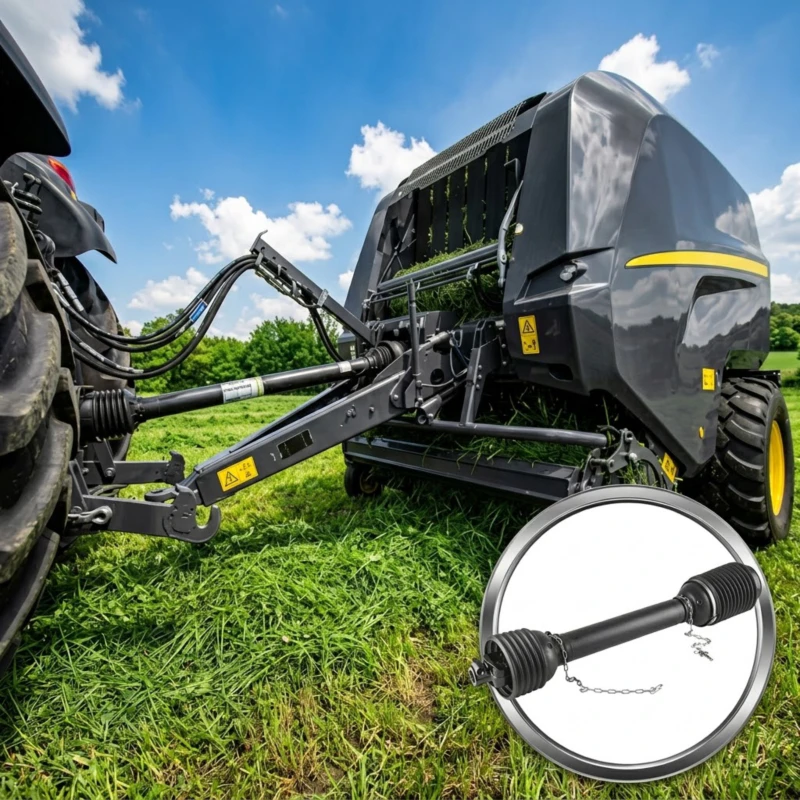
Baler connected to tractor PTO shaft — ground speed, PTO rpm, and pickup tine speed must all be matched to crop moisture for minimum leaf loss
PTO speed consistency and leaf loss: Inconsistent PTO rpm causes the pickup reel to vary speed during baling, creating alternating under-speed and over-speed contact with the crop. Under-speed leaves material on the ground; over-speed creates aggressive tine impact that shatters leaves. A worn PTO shaft with yoke play amplifies speed variation at the baler input. For operations where leaf quality is directly priced — certified organic alfalfa, horse hay, dairy feed — inspect and replace the PTO shaft before the season if wear is evident. A purpose-rated replacement PTO shaft for New Holland big balers eliminates speed variation as a contributor to leaf loss in high-value alfalfa operations.
Alfalfa Baling Across Multiple Cuttings: How the Optimal Window Shifts by Season
Alfalfa produces three to seven cuttings per year depending on climate and irrigation practice. The moisture management challenge changes significantly across cuttings because ambient temperature, relative humidity, and day length all shift through the season.
First cutting in spring typically involves cooler temperatures and higher relative humidity, which slows the drying rate. Stems may still be at 25 percent moisture when leaves have already dropped below 15 percent, because cool nights prevent the temperature differential that drives nighttime stem moisture loss in summer. First cutting often benefits from a conditioner (crimper or crusher) at the mower to accelerate stem drying and bring leaves and stems into the baling window simultaneously.
Mid-summer cuttings in hot, dry climates are the opposite problem. The entire plant can dry from 80 percent to below 15 percent in 18 to 24 hours under extreme conditions. In these environments, baling must begin within one day of cutting, with the operation concentrated in the early morning hours before the daily temperature peak. Delayed baling by even half a day in peak summer conditions can push leaf moisture below 10 percent across the whole field.
Late-season cuttings face another set of conditions: shorter days mean less solar drying time, and cooler nights promote heavy dew that re-wets windrows that were nearly dry. In these conditions the optimal moisture window may not be achievable on the same day of raking. Some operators in temperate climates plan late-season alfalfa baling specifically for the second day after cutting, when the dew window in the morning allows baling at optimal leaf flexibility even though the stems dried slowly.
اکثر پوچھے گئے سوالات
Conclusion: Every Hour of Timing Precision Translates Directly into Bale Value
Alfalfa leaf loss is not random. It is predictable, measurable, and almost entirely controllable through the three decisions this guide has covered: when to rake relative to stem moisture, when to bale relative to leaf moisture and atmospheric conditions, and how to set the baler to move crop gently through the machine. An operation that gets all three right will consistently produce bales that test in the top tier of forage quality for its climate. An operation that treats baling timing as a logistical convenience rather than an agronomic precision task will lose 10 to 20 percent of its most valuable product every season without ever seeing it happen.
If you are selecting a round baler for an alfalfa operation, the pickup reel design, feed rotor configuration, and bale density control system all affect leaf retention significantly. Our round baler range includes models with adjustable pickup tine spacing and variable feed rotor configurations suited to high-value forage crops. Contact us to discuss which specification suits your cutting volume, climate, and market requirements.
Filed under: Alfalfa Baling | Hay Quality | Round Baler Settings | Forage Management