
A business guide for baling contractors — covering capacity planning, rate setting, field scheduling, PTO shaft and machine maintenance, and how to build a contracting business that generates a sustainable return on a large square baler investment
A large square baler is one of the highest-capital agricultural machinery investments a contractor or farm operator can make. At the purchase price of a commercial-grade large square baler — and the tractor required to drive it — the capital commitment is significant, and the annual return on that capital depends almost entirely on how many hours the machine works during its productive season. A baler that sits idle for three weeks of the harvest window because the scheduling is wrong, the maintenance is unplanned, or the contracting rate does not attract enough farm clients will not generate the return needed to cover its depreciation and operating costs, let alone produce a profit.
Successful agricultural contracting with large square balers is not primarily a technical challenge — it is a business management challenge. The machines that succeed commercially are operated by contractors who plan their seasonal capacity before the first bale is made, price their services to cover all real costs including capital depreciation, maintain their equipment to prevent the unscheduled downtime that destroys a season’s profitability, and build client relationships that give them a predictable workload each season.
This article provides a practical business framework for large square baler contractors — covering capacity planning, rate setting methodology, field scheduling, machine maintenance for maximum uptime, PTO shaft management, and the client relationship practices that build a commercially sustainable contracting business.
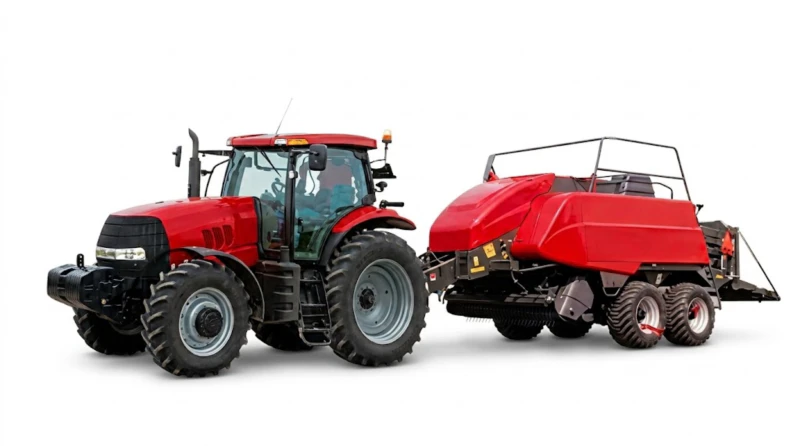
EP-9YFQ-2290XD large square baler in commercial contracting — maximising the bales-per-hour throughput and the number of contracted baling days per season determines whether this high-capital machine generates a sustainable return for the contractor
Capacity Planning: How Many Baling Days Do You Need and How Many Can You Get?
The starting point for any large square baler contracting business plan is the relationship between required annual revenue, machine throughput, and available working days. Getting this calculation right before purchasing the machine prevents the most common contractor failure mode: buying a machine too large for the available work, or too small to generate sufficient revenue to cover its costs.
Step 1: Calculate Your Break-Even Revenue Requirement
Annual costs to cover from baling revenue include:
- Capital depreciation: A large square baler depreciates at approximately 10–15% per year on straight-line basis. On a machine at the EP-9YFQ-2290XD price point, annual depreciation is a significant fixed cost that must be recovered through baling revenue regardless of how many days the machine works.
- Tractor allocation: If the contractor owns the tractor dedicated to baling, tractor depreciation and operating costs must be allocated to the baling enterprise. If the tractor serves multiple functions, allocate a realistic proportion of its annual costs to baling hours.
- Fuel: A 250 hp tractor driving a large square baler consumes 25–40 litres per hour at field work rate. At 500 productive baling hours per season, fuel cost is a material operating expense.
- Consumables: Twine or net wrap per bale, PTO shaft replacement on a 2–3 year cycle, knotter parts (needles, bill hooks, twine discs), and pickup tine replacements.
- Repairs and servicing: Budget 5–10% of machine purchase price per year for routine servicing and wear parts. Large square balers are mechanically complex; knotter system maintenance, plunger mechanism inspection, and pickup reel service are regular workshop activities.
- Labour: Operator wages, which may be the contractor’s own labour (opportunity cost) or an employee’s wage.
Step 2: Calculate Available Productive Baling Days
Available productive baling days depend on the regional hay harvest season length, weather working days within that season, and the number of client farm operations in the contractor’s service area. A practical rule: in a temperate climate with a 10–14 week hay season, a well-organised contractor with sufficient client base can achieve 60–90 productive baling days per season. In drier continental climates with longer, more reliable harvest windows, 90–120 days is achievable.
Worked Example: Break-Even Day Rate Calculation
Annual fixed cost (depreciation + allocated tractor): £35,000. Annual variable costs (fuel, consumables, repairs, labour): £25,000. Total annual cost to recover: £60,000. At 75 productive baling days per season: break-even day rate = £60,000 ÷ 75 = £800/day. At 80 bales/day average: break-even rate per bale = £800 ÷ 80 = £10/bale. Anything above this rate generates profit; anything below produces a loss on the enterprise regardless of how busy the machine appears.
Step 3: Build the Client Base to Fill the Capacity
A large square baler at 80 bales/day operating 75 days per season produces 6,000 bales. At typical large hay farm scales of 200–500 bales per farm per season, the contractor needs 12–30 farm clients to fill the machine’s capacity. Building this client base before the machine arrives — through advance contracting agreements, introductory rates for first-season clients, and networking with local hay buyers who can refer growers — prevents the most expensive contractor mistake: buying a machine before securing the work to justify it.
Contractor Rate Setting: Per Bale, Per Hour, or Per Hectare?
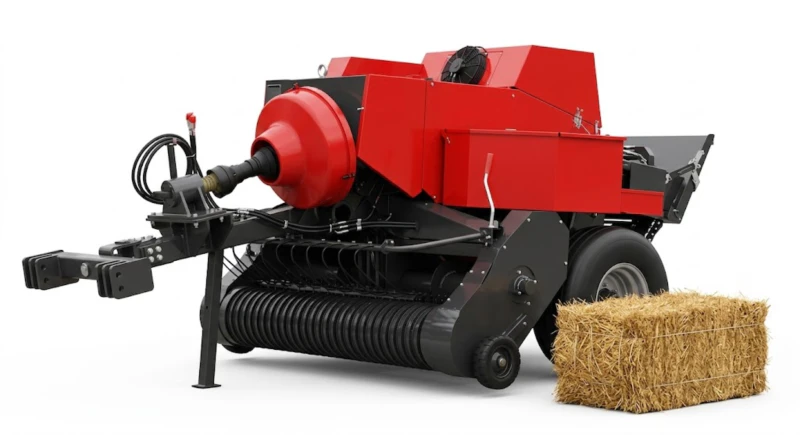
The three common rate structures for large square baler contracting each have advantages and disadvantages that depend on the baling conditions and the farm client relationship.
Per Bale Rate
The most common rate structure. The client pays a fixed amount per bale produced, regardless of field conditions or throughput rate. Simple to quote, easy for the client to budget, and directly incentivises the contractor to produce more bales per day. The risk: in poor field conditions (short swaths, wet crop, irregular windrows) throughput drops and the per-bale rate generates below-break-even revenue per hour. Protect against this with a minimum day rate clause in the contract.
Best for: standard productive fields with predictable throughput.
Per Hour Rate
The contractor charges for every clock hour the machine and operator are on the client’s farm, regardless of bale count. Protects the contractor in poor field conditions but transfers throughput risk to the client — a client who ends up paying for six hours of slow baling in a difficult field may not rebook. Works well where field conditions are reliably challenging (small irregular fields, steep slopes, short swaths) and the contractor’s day rate accurately reflects their actual costs.
Best for: complex field conditions where throughput varies significantly.
Per Hectare Rate
The contractor charges per hectare of crop baled, irrespective of bale count or time. Appropriate where the client values knowing their total cost before baling begins. The contractor carries the risk of both yield variation (more or fewer bales per hectare than expected) and throughput variation (more or less time per hectare). Works best on uniform fields with consistent, known yield history that allows the contractor to estimate bales per hectare accurately when setting the rate.
Best for: uniform commercial hay fields with known yield history.
Setting the Rate Above Market Average
The commercial pressure to match competitor rates is real, but matching the lowest competitor rate is a route to commercial failure if that rate does not cover the full cost of the baling enterprise including capital depreciation. A contractor who charges a rate that does not cover capital depreciation is effectively subsidising the client with the baler’s residual value — and will find they cannot afford to replace the machine when it reaches end of life. Set the rate based on your cost calculation first, then compare with the market to understand where you need to add value (better scheduling, quality consistency, machine reliability) to justify a rate above the lowest market price.
Machine Maintenance for Maximum Uptime: PTO Shaft, Knotters, and Pickup
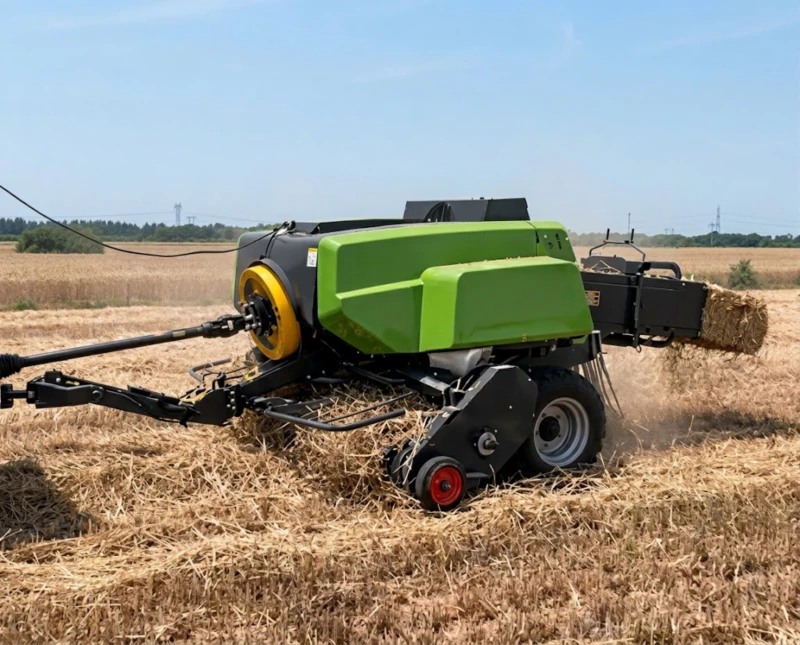
For a baling contractor, unplanned downtime during the harvest window is not merely an inconvenience — it is a direct commercial loss. A baler that is stopped for two days waiting for a knotter part or a replacement PTO shaft loses those two days’ revenue, risks losing the farm client’s work to a competitor, and may create a contractual liability if the client’s hay spoils in the windrow because baling was delayed.
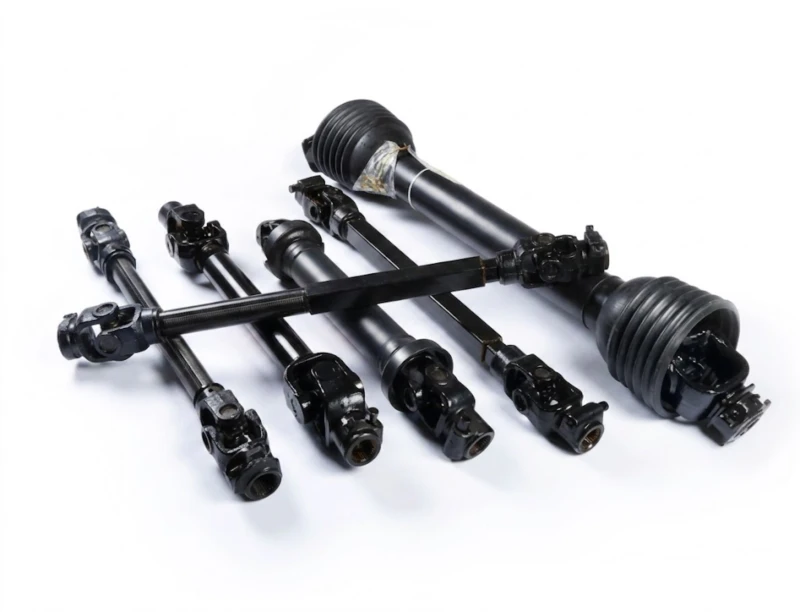
PTO Shaft: The Most Common Cause of Season-Critical Failures
เดอะ เพลา PTO connecting the tractor to the large square baler is the component that most frequently causes unplanned season stoppage in commercial baling operations. The reasons: the shaft is under sustained high torque from the plunger compression cycle; it is exposed to the vibration, contamination, and shock loads of field operation; and it is often the component that is inspected least systematically because it is partially obscured by the safety guard.
PTO shaft inspection and maintenance programme for contractors:
- Pre-season inspection (full disassembly): Remove the shaft from the tractor and baler. Disassemble the telescoping sections, clean all spline surfaces, and check for corrosion that restricts smooth telescoping. Inspect all four universal joint cross-pins for play by holding each yoke firmly and checking for rotational backlash — replace any joint showing more than 2–3 degrees of play. Check slip clutch friction face thickness against the manufacturer’s minimum; replace if worn to service limit. Reassemble with fresh EP grease at all grease points.
- Daily in-season check: Before the day’s baling, grasp each universal joint yoke and check for play. Grease all grease nipples. Confirm the guard rotates freely and is not contacting the shaft body. Confirm the slip clutch is not slipping at normal running torque (a symptom of worn friction faces). This check takes 5 minutes and catches developing failures before they cause a stoppage.
- Spare shaft policy: A commercial contractor should carry a complete spare PTO shaft matched to the tractor and baler specification. The cost of a spare shaft is a fraction of one day’s lost revenue from a shaft failure. Store the spare shaft in the trailer with the baler during the season, not in the workshop at home.
- Replacement schedule: Replace the PTO shaft every 2–3 seasons in commercial baling use, regardless of apparent condition. Universal joint bearings fatigue even when well-maintained, and a shaft that looks serviceable can fail without warning under the shock torque of a dense slug entry. Budget shaft replacement as a planned maintenance cost, not a repair cost.
Knotter System: The #1 Source of Quality Complaints
The knotter system on a large square baler is both the most mechanically complex sub-system and the most common source of client quality complaints — a bale with a missed or broken twine is immediately visible and raises questions about all bales from that session. Knotter maintenance is non-negotiable for a commercial contractor:
- Daily cleaning: Blow out all knotter bill hooks, twine discs, and needle guide slots with compressed air at the end of each working day. Chaff, dust, and twine fibre pack into the knotter mechanism during baling and cause missed knots if not removed. A missed knot on the first bale of the next day is almost always caused by yesterday’s residue in the knotter, not a mechanical fault.
- Weekly timing check: Verify knotter bill hook timing, needle timing, and twine disc engagement against the manufacturer’s specification. Timing that has drifted beyond tolerance due to wear produces inconsistent knot formation that may pass a visual check but fails under bale handling load. Carry a copy of the manufacturer’s timing diagram in the baler toolbox.
- Pre-season rebuild of high-wear parts: Replace twine disc rubber inserts, needle guide rollers, and bill hook spring assemblies before the season begins, not after the first knotter failure in the field. These parts are inexpensive relative to the cost of a baling day lost to knotter repair.
Field Scheduling and Client Management: The Organisational Side of Contracting
Building and Managing the Season Schedule
The harvest season schedule is the contractor’s most important planning tool. It must balance the competing timing requirements of multiple farm clients — each of whom wants their hay baled at its peak quality point, which in a region where all farms grow similar crops may fall within the same narrow 3–5 day window — against the physical reality that one machine can only be in one field at a time.
Effective scheduling practices for baling contractors:
- Stagger clients by cutting date: Where possible, encourage clients to stagger their mowing dates by 2–3 days across the region, creating a rolling baling window rather than a single-day peak demand. Offer a small rate incentive for clients who book early-season or late-season slots rather than peak-window slots.
- Cluster clients geographically: Plan the daily route to minimise road travel time between farms. A contractor travelling 30 minutes between each farm client loses 1–2 hours of productive baling time per day — equivalent to 8–16 bales at commercial throughput rates. Cluster geographically adjacent clients on the same day, even if their hay is not at exactly the same readiness stage, to minimise dead travel time.
- 24-hour readiness confirmation: Call each scheduled client the evening before their booked baling day to confirm the hay is at the correct moisture, the windrows are raked and ready, and access to the field is clear. A baler that arrives at a farm where the hay is still too wet or the field gate is locked is a wasted journey that costs a full travel day.
- Weather contingency plan: Have a protocol for rain-interrupted days: which clients get priority rescheduling, what the minimum lead time is for a new booking, and how delays are communicated. Clients who receive clear communication about weather-affected rescheduling remain loyal; clients who hear nothing for three days and then find their hay has been rained on do not rebook.
Adding Revenue Streams Beyond Baling
A large square baler contractor can add revenue by offering complementary services that use the same tractor and can be scheduled in the windows between baling days: mowing contracting with a front or rear mounted disc mower; tedding and raking to prepare windrows for other clients; and bale stacking services using a telehandler for clients who cannot stack their own bales after delivery. Each of these services uses the same tractor hours and extends the contractor’s revenue season beyond the core baling window, improving the return on the tractor investment that must be covered whether or not the tractor is working.
Contractor Business Metrics Quick Reference
Use the following benchmarks to assess your contracting operation’s commercial performance against industry norms. Any metric significantly outside these ranges indicates an area requiring attention.
| Metric | Target Range | If Below Target |
|---|---|---|
| Productive baling days per season | 60–90 days | Expand client base or add a second crop type (straw, maize) |
| Bales per productive day (average) | 70–100 bales | Review field scheduling, travel time, and machine throughput settings |
| Unplanned downtime days per season | ≤3 days | Strengthen preventive maintenance programme and spare parts holding |
| Knotter miss rate (bales with failed twine) | <0.5% of bales | Full knotter cleaning and timing check; replace worn bill hooks |
| Client rebooking rate (season on season) | >80% | Survey lost clients; most losses relate to scheduling, not rate or quality |
| Revenue per baling day vs break-even | >115% of break-even | Review rate structure; ensure all costs including depreciation are covered |
คำถามที่พบบ่อย
How many farm clients does a large square baler contractor typically need to break even?
This depends on each client’s baling volume. At the target of 60–90 productive days per season and 80 bales per day, a contractor producing 5,000–7,000 bales per season needs enough clients to generate that total. If the average client requires 300 bales per season (roughly 3–4 baling days), the contractor needs 17–23 clients. If some clients are larger (500–800 bales), fewer clients are needed to fill the capacity. The practical minimum client base for a viable large square baler contracting business is 12–15 committed clients providing a total of 5,000+ bales per year, with 5–8 additional occasional clients to fill weather-related gaps. Fewer than 10 committed clients typically means the machine will not achieve break-even utilisation in a normal season.
Should a contractor charge for twine or include it in the per-bale rate?
Both approaches are used in the industry, and the choice depends on local convention and the contractor’s preference for cost transparency. Including twine in the per-bale rate is administratively simpler — one number to quote and invoice. Charging twine separately allows the contractor to show a lower bale rate for marketing purposes while accurately recovering the consumable cost, which clients can verify by inspecting twine usage per bale. The risk of including twine in the rate is that twine price inflation during the season reduces margin on contracts already signed at the fixed rate. For multi-season contracts or high-volume clients where the total twine cost is material, charging twine at cost plus a handling margin is the more commercially sound approach. Whatever structure you use, document it clearly in the contracting agreement before work begins.
What is the most common reason baling contractors lose clients between seasons?
In most contractor surveys, scheduling failures — not quality problems or rate issues — are the primary reason farmers switch contractors between seasons. The most common scheduling failure is not arriving when the hay is at the correct readiness point: either the contractor is overcommitted and arrives 2–3 days late when the hay has over-dried and lost leaf quality, or the contractor cancels or reschedules without adequate notice because another client’s job took longer than expected. A contractor who consistently arrives within the agreed 24–48 hour window when the hay is ready retains clients even at a rate slightly above competitors — because the value of having reliable scheduling is greater to most farmers than the difference between competitive rates. Build your scheduling system before you build your client list.
Is it better to start with a second-hand large square baler or buy new?
A well-maintained second-hand large square baler at 60–70% of new price is a viable starting point for a new contracting business, with the important caveat that the knotter system, pickup mechanism, and PTO driveline must be fully inspected and rebuilt to serviceable condition before the first season. A second-hand baler with worn knotters, a tired pickup reel, or a marginal PTO shaft will fail at the worst possible time — peak season — and the cost of unplanned repairs plus lost revenue quickly erodes the purchase price saving. If buying second-hand, budget 10–15% of the purchase price for pre-season refurbishment of wear parts, and buy from a machine with documented service history rather than from an unknown source at an attractive price. New machine advantages — warranty coverage, factory-fresh knotter timing, and current generation features like electronic density control and bale counting — are worth the price premium if the client base exists to justify it from the first season.
Conclusion: Commercial Baling Success Is Built Before the Season Starts
The contractors who generate sustainable returns from large square balers have one thing in common: they have done the business planning work before the machine arrives. They know their break-even day rate and have priced their services above it. They have contracted enough clients to fill the machine’s productive season. They have a maintenance schedule that keeps the machine working through the harvest window without unplanned stops. And they have a scheduling system that delivers the machine to each client’s field when the hay is ready.
The machine itself — provided it is correctly specified and maintained — is the simplest element of the business. The EP-9YFQ-2290XD with its six-knotter system, NT03 electronic control, and 250 hp power class is a capable commercial tool. But a capable tool operated on an underdeveloped business plan will not generate the return that the same tool operated by a well-organised contractor will produce over the same season.
Large Square Balers for Commercial Contracting — Factory Direct from Balershay
We supply the EP-9YFQ-2290XD and the full range of large square balers for commercial hay contracting operations — with six double-knotter system, NT03 electronic density control, and factory technical support. Visit balershay.com to explore our baler range, or contact our team to discuss machine specification for your contracting operation.