
How affordable compact baling technology is enabling smallholder farmers in South Asia, Sub-Saharan Africa, Central Asia, and Latin America to mechanise alfalfa harvest, reduce post-harvest losses, and access formal feed markets for the first time
Alfalfa — known as lucerne in much of the world — is grown on every inhabited continent and is the primary high-protein forage crop for dairy cattle, small ruminants, and working animals in smallholder farming systems across the developing world. In Pakistan’s Punjab, in Ethiopia’s highlands, in Uzbekistan’s irrigated valleys, and in Peru’s Andean farming communities, alfalfa is cut multiple times per year and fed fresh, dried, or stored as loose hay to animals that are the family’s primary capital asset and income source.
The problem these farmers face is universal: alfalfa dried in the field loses 20–40% of its leaf mass — the most protein-rich fraction — before it can be collected and stored. In humid climates, rain on cut alfalfa causes fermentation losses in the windrow. Without baling equipment, the collected hay must be stacked loose — a form that does not preserve well, allows rain ingress, and cannot be sold or transported in a standardised commercial form. The result is that smallholder alfalfa farmers are largely locked out of the formal livestock feed market, forced to feed their own animals or sell surplus at farmgate prices that do not reflect the crop’s actual nutritional value.
The availability of affordable mini round balers — compact machines compatible with the 25–50 hp tractors that smallholder farmers in these markets own or have access to — is beginning to change this picture. This article examines how mini round baler adoption is progressing across key developing markets, what the technology enables that was not previously possible, and what the practical considerations are for smallholder farmers and agricultural development programmes evaluating mini baler introduction.
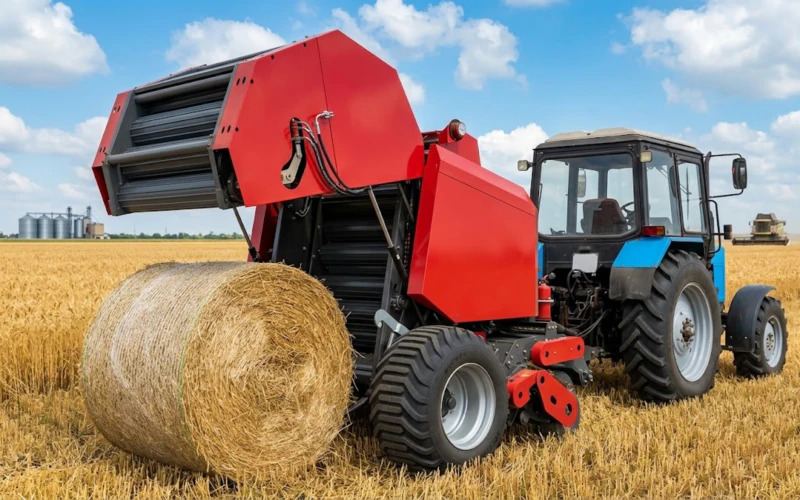
Why Alfalfa and Why Baling: The Smallholder Feed Chain Problem
Alfalfa’s nutritional profile makes it the most valuable forage crop available to smallholder livestock farmers in semi-arid and irrigated agricultural zones. At 18–22% crude protein on a dry matter basis and with a relative feed value (RFV) above 150 for early-cut material, good alfalfa hay matches or exceeds the protein content of many purchased concentrate supplements. For a smallholder dairy farmer who cannot afford commercial protein feeds, growing and conserving alfalfa effectively is the most cost-efficient route to maintaining dairy cow milk production through the dry season.
Problem 1: Leaf Loss in Field Drying
Alfalfa leaf contains 70% of the plant’s protein and 90% of its vitamins. When alfalfa is dried in the field as a windrow, the leaves dry faster than the stems — reaching crumble-dry condition while stems are still at 30–40% moisture. Manual raking and collecting at this stage shatters the dry leaves, leaving them on the soil surface. Mechanised rake-and-bale systems collect before the leaf shattering threshold, preserving leaf content at significantly higher levels than manual collection.
Problem 2: Rain Damage During Drying
In regions with monsoon, convectional afternoon rain, or high relative humidity, cut alfalfa in the windrow is at continuous risk of re-wetting before it reaches the safe storage moisture of 18% or below. Each rain event causes leaching of soluble nutrients (particularly sugars and minerals) and can initiate surface fermentation. Baling at 40–60% moisture as wrapped silage eliminates the field drying risk entirely, preserving the crop regardless of weather.
Problem 3: Loose Hay Spoilage in Storage
Loose-stacked alfalfa hay without compression has a bulk density of 40–60 kg/m³. At this density, rain and dew penetrate readily to the stack interior, producing mould and heating losses of 20–40% dry matter over a 6-month storage period. Mini round bales at 80–120 kg/m³ have significantly better rain resistance due to the curved outer surface geometry and the compressed inter-stem packing that slows moisture penetration.
Problem 4: No Marketable Product
Loose hay cannot be weighed accurately, transported in a standardised unit, or priced consistently in a market. A bale — with a defined weight, density, and visual quality — is a tradeable commodity. Mini round bales at 30–80 kg can be sold by individual bale to neighbouring farmers, through local feed dealers, or transported to urban livestock markets where the bale format commands a measurable price premium over loose hay sold by volume estimate.
Mini Round Baler Adoption by Region: Where the Technology Is Taking Root
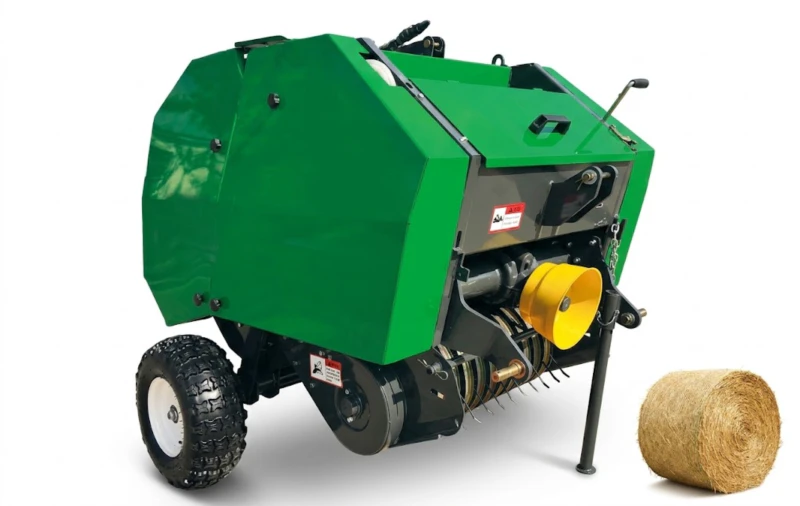
South Asia (Pakistan, India, Bangladesh)
Pakistan is among the fastest-growing markets for mini round baler adoption in the developing world. The Punjab and Sindh provinces produce substantial alfalfa for the large dairy and buffalo farming sector, and the compact two-wheel-drive and four-wheel-drive tractor fleet — predominantly 35–55 hp machines from Massey Ferguson, New Holland, and local manufacturers — is well-matched to mini round baler power requirements. The primary driver is the emergence of formal dairy cooperatives and commercial feed suppliers who pay a measurable price premium for baled hay over loose hay — providing the income incentive that justifies the baler investment for individual farmers or farmer groups.
In India, the government’s focus on dairy development through cooperatives has created a structured market for baled forage in several states. Mini round balers are being introduced through agricultural machinery subsidy schemes and farmer producer organisations (FPOs) that aggregate baler use across multiple smallholder members, sharing the machine cost across a larger operational area.
Central Asia (Uzbekistan, Tajikistan, Kyrgyzstan)
The irrigated agricultural valleys of Central Asia are major alfalfa producers — alfalfa is the primary winter forage for the region’s large sheep, cattle, and horse populations. Post-Soviet agricultural reform has created a landscape of small to medium private farm units operating Soviet-era tractor equipment (MTZ Belarus 80–82 series at 80 hp, and smaller horticultural tractors) alongside increasingly available Chinese and European compact tractors. Mini round balers sized for this tractor range are being adopted both by individual farms and by agricultural service contractors who bale multiple farms during the cutting season.
Sub-Saharan Africa (Ethiopia, Kenya, Tanzania, Zimbabwe)
Ethiopia’s highland and rift valley zones support alfalfa production for the growing commercial dairy sector centred on Addis Ababa and other urban markets. The tractor fleet is a mix of small four-wheel-drive tractors (35–50 hp) provided through government mechanisation programmes and NGO agricultural development projects, as well as privately owned machines. Baled forage supply to urban dairy operations is a growing market segment, with bale price premiums reflecting the scarcity of standardised, storable feed in the dry season.
Latin America (Peru, Bolivia, Ecuador, Mexico)
Andean farming communities in Peru and Bolivia grow alfalfa at altitude (2,500–4,000 m) for guinea pig (cuy) production — a high-value protein source in Andean food culture — as well as for dairy cattle and sheep. The relatively small field sizes and terrain of mountain agriculture suit compact equipment, and the mini round baler’s light weight and manoeuvrable dimensions are practical advantages over larger machines on Andean farm holdings. In Mexico, alfalfa is a major commercial crop in irrigated regions of Sonora and Baja California, where larger equipment dominates, but in the central highlands smallholder production suits mini baler scale.
Practical Adoption Considerations: Tractor Match, PTO Shaft, and Operating Skills
Introducing a mini round baler to a smallholder farming context requires more than simply purchasing the machine and delivering it to the farm. Successful adoption depends on tractor compatibility, PTO shaft specification and availability, operator training, and local maintenance support. Failures in any of these areas produce machines that sit idle after early mechanical problems rather than transforming the farm’s feed management.
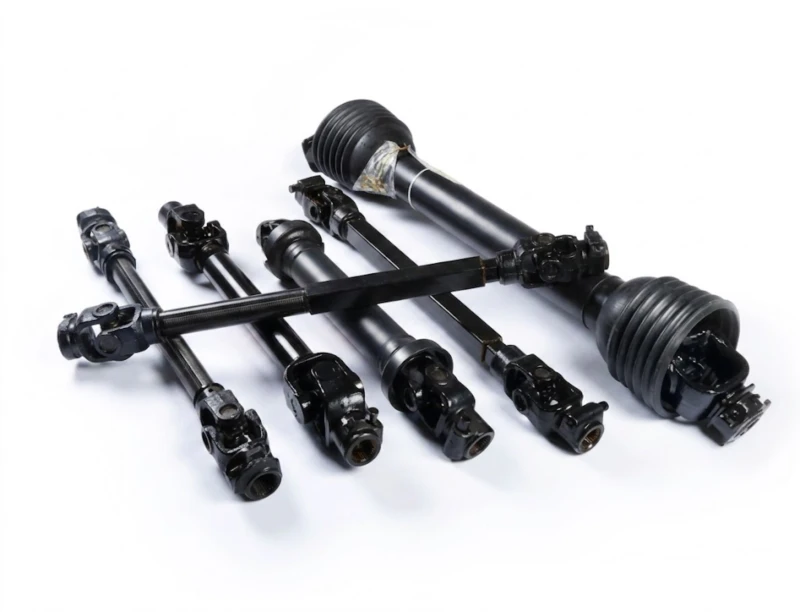
Tractor Compatibility in Developing Market Fleets
The tractor fleet in developing market smallholder contexts is diverse and often ageing. Common models include the Belarus MTZ 80/82 (80 hp, 540/1000 rpm PTO), the Massey Ferguson 240/265 (50–65 hp), the New Holland TT series (55–75 hp), and locally assembled Chinese tractors in the 25–50 hp range. Mini round balers sized for 25–50 hp are fully compatible with the lighter Chinese and smaller Massey Ferguson models; the Belarus MTZ at 80 hp significantly over-powers a mini round baler but can operate one at reduced throttle settings.
The critical compatibility check beyond power is PTO stub type. The 1–3/8 inch 6-spline PTO stub is the international standard for tractors up to approximately 75 hp and is found on virtually all compact tractors in the 25–50 hp range globally. However, some Eastern European and Soviet-era tractor models use a metric spline PTO stub — confirm spline type before ordering a PTO shaft, as adapters for metric-to-inch spline conversion must be sourced before the baler can be connected.
PTO Shaft Availability and Maintenance in Developing Markets
De PTO-as connecting the tractor to the mini round baler is frequently the first component to require replacement in a developing market agricultural context. Reasons include: incorrect shaft length specified at purchase (too short — goes solid when the baler is on uneven ground; or too long — bottoms out when the three-point linkage is raised); slip clutch set too tightly and burning out rather than slipping on blockage events; and universal joint cross-pins worn quickly due to insufficient lubrication in dusty conditions where grease nipples are not serviced at adequate intervals.
For agricultural development programmes introducing mini balers into new markets, the following PTO shaft management practices significantly improve long-term machine reliability:
- Measure and specify shaft length precisely for each tractor-baler combination at installation, not from a generic chart.
- Supply a complete spare PTO shaft with each baler — the cost is modest relative to the baling system investment, and having a replacement available on the farm prevents a shaft failure from stopping the operation for weeks while a replacement is sourced.
- Train operators to grease all PTO shaft grease points at every shift change (once per day in continuous operation) — in dusty field conditions, daily greasing is the standard, not weekly.
- Mark the correct compression-to-extension range on the telescoping shaft tube with a paint pen so the operator can visually check that the shaft is within its working range without measuring tools.
Operator Training Requirements
Mini round baler operation is not complex, but it requires understanding of four operating principles that are not intuitive to operators who have never used mechanised baling equipment: maintaining the correct forward speed for the swath volume (too fast blocks the intake; too slow produces under-density bales); recognising the bale-full signal and stopping to allow wrapping and ejection; adjusting chamber pressure between crops (higher for dry straw, lower for green grass silage); and responding correctly to intake blockage — stopping the tractor before attempting to clear a blockage rather than trying to drive through it, which can cause serious pickup reel damage. A structured half-day training session with a demonstration baler on actual crop material, followed by supervised operation for the first baling session, produces competent operators from farmers with no prior baling experience.
Economics of Mini Round Baler Adoption for Smallholder Alfalfa Farmers
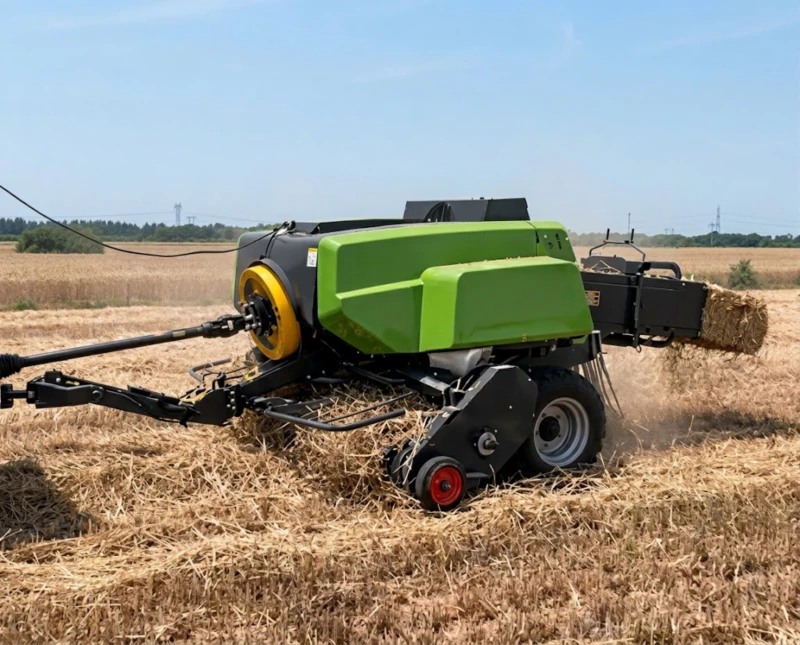
The economic case for mini round baler adoption by a smallholder alfalfa farmer depends on three variables: the local price premium for baled vs loose hay, the annual baling volume (total area and number of cuts), and the access model (own, shared, or contracted).
Price Premium for Baled Hay
In most developing market urban livestock feed markets, baled alfalfa commands a 25–60% premium over loose hay on a per-kilogram basis. This premium reflects the standardised weight, lower spoilage rate in storage, transport convenience, and the quality signal that a well-formed bale conveys to the buyer. In Pakistan’s urban dairy markets, the premium has been documented at 30–50% in multiple surveys. Even at a conservative 30% price premium, the additional revenue from baled vs loose hay improves the net return from the alfalfa crop significantly.
Reduced Post-Harvest Losses
The reduction in post-harvest dry matter and quality losses from baling vs loose handling is itself a significant economic benefit. If baling reduces field leaf loss by 15 percentage points (from 30% to 15% leaf loss during collection) and reduces storage losses by 15 percentage points (from 30% to 15% over 6 months), the effective yield of marketable alfalfa from the same area increases by 30–40% compared with manual loose-hay production. This yield gain alone often pays for the baling cost in the first season.
Individual vs Shared Ownership
For the typical smallholder alfalfa farm of 1–5 ha with 4–6 annual cuts, individual ownership of a mini round baler is rarely economically optimal — the seasonal baling volume is too small to repay the capital cost within a reasonable period. Shared ownership through a farmer group (10–20 farms sharing one baler on a scheduled rotation), cooperative ownership, or a service-contractor model (one owner baling many farms for a per-bale fee) all achieve better returns on the capital than individual ownership at small scale.
Contractor Model Revenue
In markets where baling contracting is developing, a mini round baler owner operating as a service contractor across 50–100 ha of smallholder alfalfa per season (at 4–6 cuts per year = 200–600 ha of annual baling) can generate contractor revenue that pays back the machine investment in 2–4 seasons. The contractor model also eliminates the scheduling problem of shared ownership while making baling accessible to farms too small to justify any ownership interest.
Checklist for Agricultural Development Programmes and First-Time Buyers
Whether you are a development programme introducing mini balers into a new market, a farmer cooperative evaluating the investment, or an individual farmer assessing your own situation, the following checklist covers the critical pre-purchase questions.
Market Verification
- ☐ Is there a documented price premium for baled vs loose hay in my local or urban market?
- ☐ Have I identified at least 2–3 buyers who will purchase baled alfalfa at a specified price?
- ☐ What bale weight and size do my buyers prefer or can handle?
- ☐ Can I transport bales to market with available transport (own tractor trailer, local truck)?
Tractor and PTO Shaft
- ☐ What is my tractor’s rated PTO output in hp?
- ☐ Does my tractor have a 540 rpm PTO with 1–3/8 inch 6-spline stub?
- ☐ Have I measured the correct PTO shaft length for my tractor-baler combination?
- ☐ Is a spare PTO shaft available locally or will I order one with the baler?
Ownership and Cost Recovery
- ☐ What is my total annual baling area (own farm + potential service area)?
- ☐ At the local baling fee or price premium, in how many seasons does the investment pay back?
- ☐ Is a group or cooperative ownership model more appropriate than individual purchase?
- ☐ Is there a maintenance technician or spare parts supplier within reasonable distance?
Veelgestelde vragen
Can a two-wheel-drive tractor operate a mini round baler on flat irrigated land?
Yes — on flat to gently sloping fields with firm, dry soil conditions, a two-wheel-drive tractor in the 35–50 hp range can operate a mini round baler effectively. The critical traction requirement is during headland turns with a full bale chamber, where the rear-mounted baler’s weight shifts load off the front wheels. On wet or soft soils, two-wheel-drive tractors may struggle with wheel slip while towing a loaded baler on headland turns. In these conditions, adding front ballast weights and fitting the widest rear tyres available for the tractor significantly improves traction. Four-wheel-drive compact tractors are preferable for variable terrain and wet season operation, but many smallholder operations successfully use two-wheel-drive tractors with appropriate field management.
What is the minimum field size for mini round baling to be practical?
Mini round balers are practical on fields as small as 0.3–0.5 ha — the machine is sufficiently compact and manoeuvrable to operate efficiently on small plots. Below 0.3 ha, the proportion of time spent on headland turns and setup relative to productive baling time becomes unfavourable, and hand-cutting with a mower and loose storage may be more efficient. The minimum practical field size also depends on the swath layout — very narrow, irregular fields with many obstacles produce excessive turning time that reduces the baler’s effective utilisation. For smallholder operations with multiple small plots totalling 1–5 ha, the cumulative baling area is sufficient to justify the machine even if individual plots are small.
How long do mini round bales last in outdoor storage without wrapping?
Mini round bales of dry hay (below 18% moisture) stored outdoors without wrapping or covering typically experience 10–20% dry matter loss from the outer 50–100 mm of the bale over a 6-month storage period in tropical and subtropical climates. The cylindrical shape sheds most rainfall, limiting the weathered zone to the outer layer. In monsoon climates with prolonged heavy rain, the outer loss can be higher. The practical rule: bales stored outdoors in tropical climates for up to 3 months lose an acceptable amount from the outer layer; bales stored for 6 months or through a monsoon season should be covered with shade cloth or tarpaulin, or stored under a simple shelter, to limit losses to the 10–15% range. Net-wrapped bales resist outer layer losses better than rope-wrapped bales because the net wrap compresses the outer layer and reduces rain penetration.
What consumables does a mini round baler require and how available are they in developing markets?
The primary consumable for a rope-wrap mini round baler is the wrapping rope — sisal or polypropylene, typically used at 2–4 wraps per bale. Polypropylene rope is widely available in agricultural markets globally and is the most accessible option in developing markets. The secondary consumables are lubricating grease (standard lithium EP grease, universally available) and drive chain lubricating oil. Occasional replacement parts include pickup tine fingers (wear items in abrasive soil conditions), belt tensioner bearings, and PTO shaft universal joints. For a programme introducing balers into a new market, confirming local availability of polypropylene rope of the correct diameter and tensile strength before deployment is essential — a baler that cannot be supplied with rope is useless regardless of its mechanical condition.
Conclusion: Appropriate Technology at the Right Scale Changes Farm Economics
The mini round baler is an example of appropriate technology in the most precise meaning of the term: it is scaled to the tractor power, field size, labour availability, and market structure of smallholder farming systems in developing markets, not to the requirements of large commercial farms in high-income countries. A machine that operates on a 35 hp tractor and produces a 40 kg bale that one person can carry is genuinely transformative in a context where the alternative is labour-intensive hand-collection of loose hay with 30–40% post-harvest losses.
The adoption curve for mini round balers in developing markets follows a predictable pattern: early adopters demonstrate the technology and price premium, cooperatives and development programmes support wider access through shared ownership and training, and eventually the service contracting model creates a commercial baling infrastructure that makes mechanised baling accessible to every smallholder farmer in the region regardless of their own equipment ownership. Each of these stages is already visible in different markets globally, and the pace of adoption is accelerating as machine prices become more accessible and the formal baled hay market deepens.
Mini Round Balers for Smallholder and Developing Market Operations — Factory Direct
We supply compact mini round balers including the EP-9YK-870 for 25–50 hp tractors, with full technical support, spare parts availability, and export-ready packaging for international delivery. Visit balershay.com to explore our baler range, or contact our team to discuss specifications for your market.