
A reference guide to bale weights across mini round balers, standard round balers, large square balers, and direct-cut cotton balers — covering the crop, moisture, and density variables that determine actual bale weight, and why bale weight matters for transport, handling, pricing, and contract compliance
Bale weight is one of the most frequently asked questions in agricultural baling, and one of the most inconsistently answered. Ask a farmer what their round bales weigh and you will hear anything from “about 200 kg” to “it depends” — both of which are correct, because bale weight is not a fixed characteristic of a baler. It is a product of the baler model and dimensions, the crop being baled, the moisture content of the crop at baling, and the chamber pressure setting the operator has chosen. Two bales produced by the same machine on the same field on the same day can differ by 20–30% in weight if one comes from a dense, heavy swath and the other from a thin, light section.
Bale weight matters beyond the academic interest in a specification table. It determines the number of bales a truck can legally carry before reaching its gross vehicle weight limit — directly affecting transport cost per tonne. It determines whether a single person can handle a bale manually or whether mechanical handling is required. It determines the feeding value per bale for livestock ration planning. It determines whether a bale meets the minimum weight specification in a hay supply contract or biomass delivery agreement. And it determines the return on the land’s forage production, because a consistent, predictable bale weight is the foundation of accurate yield measurement and market pricing.
This article provides a comprehensive reference to bale weights across all the baler types in the balershay.com range, explains the variables that cause weight to vary, and gives practical guidance on measuring and predicting bale weight for commercial and operational planning purposes.
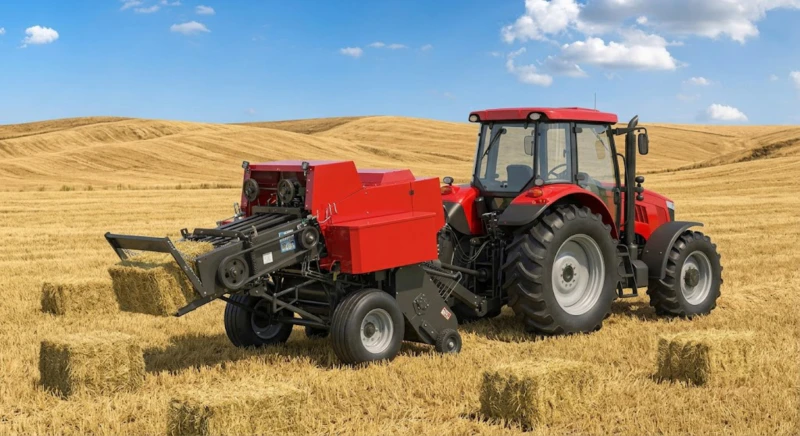
The Bale Weight Equation: Volume, Density, and Moisture
Every bale weight calculation starts from the same three-variable equation: bale volume multiplied by bale density equals bale weight. Understanding each variable is the key to predicting weight and diagnosing why weights are varying unexpectedly in the field.
Variable 1: Bale Volume
Bale volume is determined by the baler model and its chamber dimensions. A round bale’s volume is calculated as π × r² × L, where r is the bale radius and L is the bale width. A large square bale’s volume is simply length × width × height. Bale volume is fixed for a given baler model and does not vary between bales made by the same machine — it is the most predictable component of the weight equation.
Variable 2: Bale Density
Bale density (kg/m³) is determined by the chamber pressure setting and the crop being baled. It varies between bales from the same machine based on crop conditions and operator settings. This is the variable most directly under operator control and the one most commonly used to adjust target bale weight: increasing chamber pressure increases density and therefore weight; reducing pressure reduces both.
Variable 3: Moisture Content
Moisture content affects bale weight without changing bale volume or dry matter density. A bale at 25% moisture contains 25 kg of water per 100 kg of total bale weight — or, equivalently, 75 kg of dry matter per 100 kg of wet weight. The same volume of crop baled at 14% moisture contains 86 kg of dry matter per 100 kg of wet weight. This means a wet bale is significantly heavier than a dry bale of the same size and dry matter content — which matters enormously for transport planning (more weight per truck) and for pricing (wet bales sold by weight contain less feeding value per kilogram than dry bales).
Worked Example: Weight at Different Moisture Contents
A standard round bale with volume 0.90 m³ and dry matter density 130 kg DM/m³ contains 117 kg of dry matter regardless of moisture. At 14% moisture (safe hay): wet weight = 117 ÷ 0.86 = 136 kg. At 20% moisture (borderline wet hay): wet weight = 117 ÷ 0.80 = 146 kg. At 55% moisture (silage): wet weight = 117 ÷ 0.45 = 260 kg. The same dry matter content produces bales ranging from 136 kg to 260 kg depending on moisture — a factor of nearly 2× at the extremes. Always clarify whether a quoted bale weight is wet weight or dry matter weight when comparing prices or planning logistics.
Bale Weight Reference by Machine Type: Mini Round Baler to Large Square Baler
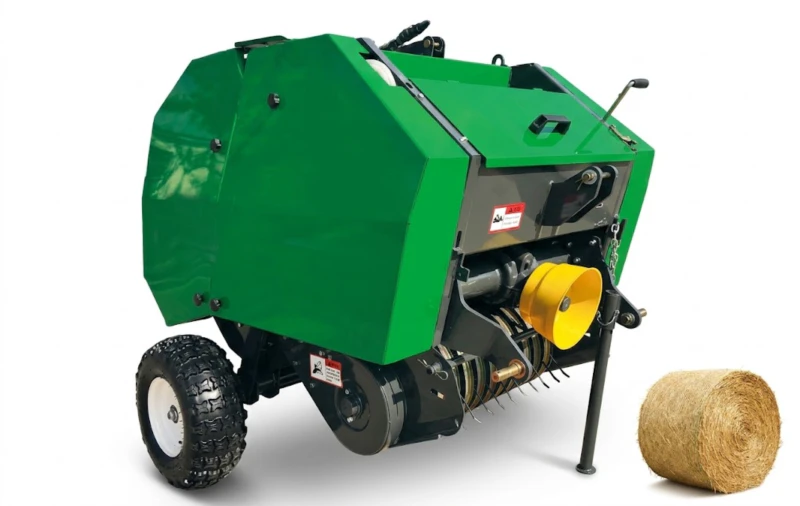
EP-9YK-870 Mini Round Baler
| Crop | Moisture | Density (kg/m³) | Bale Volume (m³) | Est. Wet Weight |
|---|---|---|---|---|
| Dry grass hay | 14% | 90–110 | 0.218 | 20–24 kg |
| Alfalfa hay | 14% | 80–100 | 0.218 | 18–22 kg |
| Wheat straw | 10% | 60–80 | 0.218 | 13–17 kg |
| Silage grass | 55% | 200–240 | 0.218 | 44–52 kg |
Bale volume = π × 0.315² × 0.700 = 0.218 m³ for Φ630×700 mm nominal bale. Actual weight varies ±15% with field conditions and density setting.
Standard Round Baler (Φ1,200×1,200 mm Reference)
| Crop | Moisture | Density (kg/m³) | Bale Volume (m³) | Est. Wet Weight |
|---|---|---|---|---|
| Dry grass hay | 14% | 120–150 | 1.357 | 163–204 kg |
| Alfalfa hay | 14% | 110–140 | 1.357 | 149–190 kg |
| Wheat straw | 10% | 80–110 | 1.357 | 109–149 kg |
| Silage grass | 55% | 200–250 | 1.357 | 271–339 kg |
Bale volume = π × 0.600² × 1.200 = 1.357 m³ for Φ1,200×1,200 mm reference bale.
EP-9YFQ-2290XD Large Square Baler (1,200×875 mm Cross-Section)
| Crop | Moisture | Density (kg/m³) | Bale Volume (m³) | Est. Wet Weight |
|---|---|---|---|---|
| Dry grass hay | 14% | 160–200 | 2.100 | 336–420 kg |
| Export alfalfa hay | 12% | 180–220 | 2.100 | 378–462 kg |
| Wheat straw (biomass) | 12% | 120–160 | 2.100 | 252–336 kg |
| Rice straw | 14% | 100–140 | 2.100 | 210–294 kg |
Bale volume = 1.200 × 0.875 × 2.000 = 2.100 m³ for reference bale length. Actual bale length is variable; adjust proportionally.
Cotton Stalk Direct-Cut Baler: Weight Variability and Commercial Implications
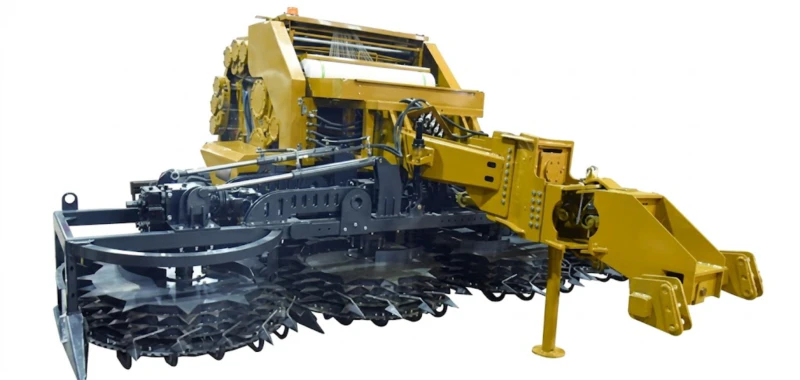
The EP-9YDM-1.4 direct-cut cotton stalk baler presents a different weight profile from forage balers because the crop material — standing, lignified cotton stalks — has highly variable bulk density depending on cotton variety, plant population, growing season, and post-harvest condition. Typical bale weight range: 180–280 kg per bale, with the EP-9YDM-1.4 specification citing approximately 200–250 kg as the normal operating range.
The primary sources of weight variability in cotton stalk baling are:
- Stalk population density: High-population cotton varieties (more plants per hectare) produce more stalk volume per unit of field area, feeding the baler more densely and producing heavier bales. Low-population or drought-stressed crops produce lighter bales from the same machine at the same pressure setting.
- Stalk moisture at baling: Stalks baled within 2–3 weeks of harvest completion retain more moisture than stalks left standing for 6–8 weeks. Earlier baling produces heavier wet-weight bales from the same dry matter content — this matters for transport planning but not for biomass energy value, which is measured on a dry matter basis.
- Forward speed variation: The direct-cut baler’s bale chamber fills faster in dense field areas and more slowly in thin areas. Operators who maintain constant forward speed through variable field conditions will produce lighter bales in thin-stalk areas. Reducing speed in thin areas to maintain consistent bale fill is the correct practice for weight consistency.
- Variety and growing season: Upland cotton varieties produce more lignified, denser stalks than some longer-season varieties. A good growing season with high yield typically produces heavier bales than a drought year from the same machine at the same settings.
Bale Weight in Transport and Commercial Pricing: Why It Matters More Than You Think
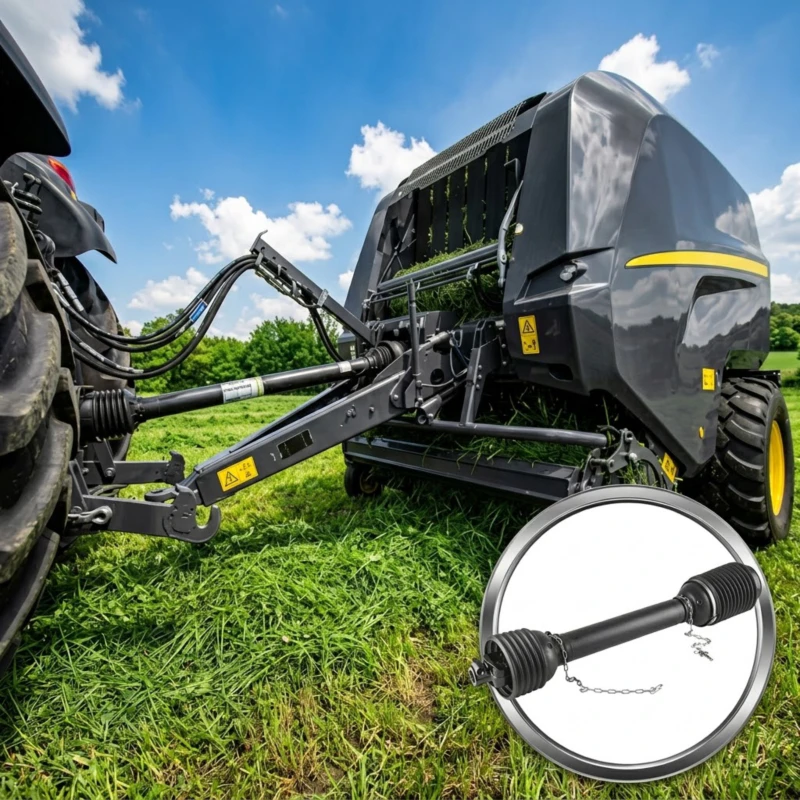
Transport: Bales per Truck Load
Road transport gross vehicle weight limits — typically 26–44 tonnes depending on vehicle configuration and country — set a hard ceiling on how much payload a truck can carry. Knowing the average bale weight is the first step in calculating bales per load, and therefore transport cost per bale and transport cost per tonne of product.
A typical flatbed trailer with 22 tonnes payload capacity carries approximately:
- Large square hay bales at 380 kg each: 57 bales per load (22,000 ÷ 380)
- Standard round hay bales at 180 kg each: 122 bales per load
- Cotton stalk bales at 230 kg each: 95 bales per load
- Mini round bales at 22 kg each: Up to 1,000 bales per load (typically limited by volume rather than weight)
The difference between a 350 kg and a 420 kg large square bale changes the number of bales per truck load from 62 to 52 — a 16% difference in transport efficiency that directly affects the delivered cost per tonne at the buyer’s gate.
Pricing: Wet Weight vs Dry Matter Weight
Hay is commonly priced per bale (in local smallholder markets) or per tonne of product (in formal commercial markets). When pricing is per tonne of wet weight, bale moisture content directly affects the price paid per unit of dry matter — a buyer paying the same price per tonne for 20% moisture hay as for 14% moisture hay is paying 7.5% more per unit of dry matter for the wetter product, because less of the total weight is dry matter. Formal hay supply contracts increasingly specify a reference moisture and adjust payment for deviation from that reference, eliminating the buyer’s moisture risk at the cost of more complex payment calculation.
Measuring Actual Bale Weight in the Field
The most reliable way to establish actual bale weight for commercial planning is direct field weighing — using a bale weigh system mounted on the baler, a weigh fork attachment on the bale handler, or a portable platform scale at the field gate. Weigh at least 20–30 consecutive bales at the start of each new field or crop type, calculate the average and standard deviation, and use these as the planning parameters for that field and crop. Bale weight estimated from specification tables alone carries a ±20–25% uncertainty; direct field weighing reduces this to ±5–8% from natural field variation.
Bale Weight for Livestock Feeding: Ration Planning and Daily Intake Calculation
Knowing the average bale weight allows the livestock farmer to calculate how many bales are required to feed a given number of animals through the winter or dry season — the most practical planning application of bale weight data on the farm. The calculation chain is: daily dry matter intake per animal class × number of animals × number of feeding days ÷ dry matter content per bale = total bales required.
Dairy Cow (600 kg body weight)
Daily dry matter intake from hay: 8–12 kg DM/day (supplementing grazing or as primary winter feed). At 10 kg DM/day per cow, a 50-cow herd requires 500 kg DM per day. A standard round bale of 180 kg wet weight at 14% moisture contains 155 kg DM. The herd consumes approximately 3.2 bales per day, or 580 bales over a 180-day winter period.
Beef Cattle (400 kg body weight)
Daily dry matter intake from hay: 6–9 kg DM/day. A 100-head beef enterprise at 7.5 kg DM/day requires 750 kg DM per day. At 155 kg DM per standard round bale, this requires 4.8 round bales per day, or 870 bales over 180 days. Note: large square bales at 320 kg DM per bale reduce the daily bale-handling count from 4.8 to 2.3 bales — a significant labour saving for large herds.
Sheep (60 kg body weight)
Daily dry matter intake from hay: 1.0–1.5 kg DM/day (dry ewes); 1.5–2.0 kg DM/day (late pregnancy/lactation). A 200-ewe flock in late pregnancy at 1.8 kg DM/day requires 360 kg DM per day. At 155 kg DM per round bale, 2.3 bales per day, or 207 bales over a 90-day late pregnancy period. Mini round bales at 18 kg DM per bale require 20 bales per day — appropriate for small flocks managed with manual handling.
Feeding Waste Allowance
Ration planning must account for feeding waste — hay not consumed that falls to the ground and is trampled or contaminated. Feeding waste in a ring feeder without a base mat: 10–20% of hay offered. Feeding waste on a concrete pad with a ring feeder: 5–8%. Direct on-ground feeding without a ring: 25–35%. Multiply the calculated bale requirement by a waste factor of 1.10–1.35 depending on the feeding system to arrive at the total bales to store for the feeding period.
Planning tip: Always calculate bale requirements using the dry matter weight per bale, not the wet weight — moisture content can vary significantly between field batches, and a wet bale provides less nutrition per kilogram of total weight. Record the average DM content of each bale batch at storage intake and use this figure for feeding period planning.
よくある質問
Why do my round bales vary so much in weight even on the same field?
Weight variation within a single field is normal and has three main causes. First, natural variation in the crop sward — areas of denser grass growth produce more crop per metre of windrow, filling the bale chamber faster and producing heavier bales than thin patches. Second, windrow consistency — if the windrow width varies because of uneven tedding or raking, the baler receives more or less crop per metre of forward travel, producing weight variation even in a uniform sward. Third, moisture variation across the field — low-lying wetter areas produce heavier bales from the same volume of crop because moisture adds weight without adding dry matter. To reduce within-field weight variation, focus on producing consistent-width windrows before baling and monitor the baler’s PTO load as an indirect indicator of swath density variation. Electronic density control, available on the EP-9YFQ-2290XD, significantly reduces weight variation by adjusting chamber pressure to compensate for crop density changes.
How much does a silage bale weigh compared to a hay bale of the same dimensions?
A silage bale from the same baler is typically 1.6–2.2 times heavier than a dry hay bale of the same dimensions, depending on the moisture content of the silage crop. A standard round baler producing hay bales at 180 kg at 14% moisture will produce silage bales of 280–360 kg from the same machine when baling at 55–65% moisture, because the bale volume is identical but the silage crop is much denser per unit of volume due to the water content. This weight difference has immediate practical implications: handling equipment — telehandlers, bale forks — must be rated for the heavier silage bale weight, not the lighter hay bale weight; transport must account for the higher load per bale; and workers must never attempt to manually handle silage bales of this weight.
Does a larger bale always mean better value per tonne of hay?
Not necessarily — the comparison must include handling and transport costs as well as production cost per bale. A large square bale of 380 kg has a lower baling cost per tonne of dry matter than a mini round bale of 22 kg from the same crop, because the baler makes fewer bale cycles per tonne of crop and the twine cost per tonne is lower. However, if the buyer is a smallholder who cannot handle a 380 kg bale and requires individually portable units, the mini bale’s higher cost per tonne is justified by its market utility. In logistics-intensive commercial operations — export hay, biomass supply chains — the large square bale’s transport efficiency advantage (more tonnes per truck load at higher bulk density) typically outweighs the higher capital cost of the baler over a full season. Choose bale size based on what the end market can handle and pay for, not only on baling cost per tonne.
How do I convert bale count to tonnes of hay for sales invoicing?
The most accurate method is to weigh a representative sample of bales — at least 10–20 bales from the lot being invoiced — and use the average weight multiplied by the total bale count. If direct weighing is not practical, use the calculated estimate from bale volume times density, but state the estimation method in the invoice and agree the approach with the buyer before delivery. For moisture-adjusted invoicing, measure moisture on a sample of bales from the lot and apply the agreed moisture-to-dry-matter conversion formula. The formula: dry matter weight = wet weight × (1 − moisture fraction). For a 350 kg bale at 16% moisture: dry matter weight = 350 × 0.84 = 294 kg DM per bale. Total dry matter tonnes = bale count × 294 ÷ 1,000. Agree the reference moisture and payment adjustment formula with commercial buyers before the season begins, not at invoicing time.
Conclusion: Know Your Bale Weight Before You Need It
Bale weight is not a fixed number — it is a variable that depends on the baler, the crop, the moisture, and the density setting, and it varies meaningfully across all of these dimensions. But it is a variable that can be measured, predicted, and controlled within a practical range, and doing so before transport, before pricing, and before contract commitments produces better commercial outcomes than discovering unexpected weight after the fact.
The reference weights in this guide provide a planning baseline. Field weighing provides the actual data for your specific crop and conditions. And the understanding of what drives weight variation — moisture, density, swath consistency, crop species — provides the tools to manage weight within the range your buyers and logistics require.
Balers for Every Bale Weight Requirement — Factory Direct from Balershay
From the 18–52 kg EP-9YK-870 mini round baler to the 250–460 kg EP-9YFQ-2290XD large square baler, we supply machines matched to every market, logistics system, and end-use specification. Visit balershay.com to explore our full range, or contact our team to discuss bale weight targets for your specific crop, market, and logistics requirements.