
A comparative analysis of post-harvest cotton stalk management methods — field burning, mechanical chopping and incorporation, and direct-cut baling — covering economics, agronomics, pest management, soil health, regulatory compliance, and commercial opportunity
Every cotton harvest leaves behind a standing crop of lignified stalks that must be cleared before the next planting season. For most of the history of commercial cotton farming, the answer to this challenge has been simple and brutal: burn the field. Fire is fast, cheap in direct labour terms, and effective at killing overwintering pest populations in the stalk residue. It is also increasingly illegal, socially unacceptable in populated agricultural regions, harmful to soil organic matter and microbial communities, and a source of fine particulate air pollution that health regulators in China, India, Pakistan, the United States, and across sub-Saharan Africa are progressively tightening restrictions around.
When burning is removed as an option — by regulation, by social licence pressure, or by carbon accounting requirements for sustainability-certified cotton supply chains — two mechanical alternatives remain: mulching (chopping and incorporating the stalks into the soil) and baling (collecting and removing the stalks from the field as a marketable biomass product). These two approaches differ fundamentally in their economics, their effect on soil health, their pest management implications, and their commercial outcomes.
This article provides a systematic comparison of all three management approaches — burning, mulching, and baling — across the dimensions that matter most to a cotton farmer making the residue management decision: direct cost, soil health impact, pest and disease management, regulatory risk, and the potential to generate revenue from the residue rather than simply paying to remove it.
The Three Management Methods: How They Work and What They Cost
Method 1: Field Burning
How it works: Stalks are cut or pulled at the base and the entire field residue is ignited. Fire burns through the standing or pushed-down stalks over several hours, leaving an ash layer on the soil surface.
Direct cost: Very low — labour to ignite and monitor, plus regulatory compliance cost if permits are required. In regions without permit requirements, apparent cost is close to zero.
Hidden costs: Soil organic matter destruction; microbial community damage; fine particulate emissions; regulatory fine risk; loss of carbon credit eligibility; and periodic whole-field fire escape causing crop or infrastructure damage in adjacent properties.
Status: Increasingly restricted or banned in major cotton-producing regions.
Method 2: Mulching (Chop and Incorporate)
How it works: A heavy-duty flail mower or rotary cutter chops the standing stalks to 50–150 mm lengths. The chopped material is then incorporated into the soil by disc harrow, chisel plough, or mouldboard plough in a subsequent operation.
Direct cost: Moderate to high. Typically requires 2–3 separate machinery passes: chopping, incorporation, and possibly a second pass to bury the material below the planting depth. Fuel and machinery wear costs are significant.
Issues: Chopped stalks with high C:N ratio decompose slowly, immobilising soil nitrogen from subsequent crops. Pest larvae and disease inocula are buried in the soil rather than removed from the field — mulching does not eliminate the pest reservoir, it relocates it.
Status: Accepted practice but not optimal on economics or pest management.
Method 3: Direct-Cut Baling
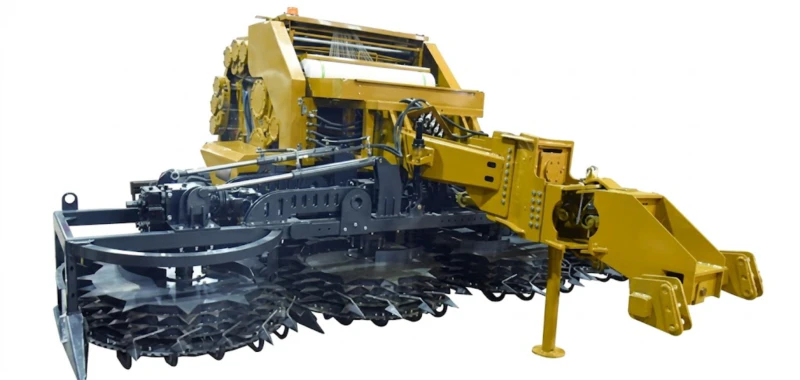
How it works: A direct-cut baler with disc cutting header simultaneously cuts, collects, and compresses standing stalks into round bales in a single field pass. Bales are removed from the field and sold into biomass, bedding, or industrial fibre markets.
Direct cost: Higher per-pass machine cost than mulching but achieved in a single pass, comparable total cost. The critical difference: baling generates revenue from the removed material that partially or fully offsets the baling cost.
Advantages: Field cleared in one pass; pest and disease material physically removed from field; no tillage passes required; marketable bale product; regulatory compliance maintained; carbon credit eligibility retained.
Status: Growing adoption as the preferred post-burn alternative in regulated markets.
Pest and Disease Management: Why Baling Delivers Better Field Hygiene Than Mulching
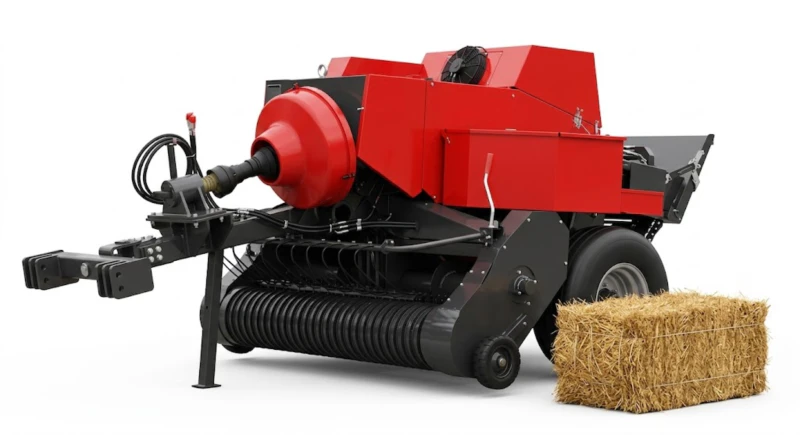
Cotton stalk residue is the overwintering habitat for the most economically damaging cotton pests in every major producing region. Understanding what survives in the stalk — and how different management methods affect pest survival — provides a clear framework for evaluating the pest management value of each residue treatment approach.
What Overwinters in Cotton Stalk Residue
Larvae diapause in the stalk interior through winter, emerging as adults in spring. High larval density in untreated stalks produces early-season re-infestation of the following cotton crop. Baling removes the stalk with larvae intact; burning kills larvae on the soil surface but leaves root-zone diapause populations unaffected.
Adults overwinter in soil surface litter and stalk debris. Stalk removal by baling reduces the shelter and food source for overwintering adults, contributing to lower adult emergence in spring and reduced first-generation infestation of the new crop.
Soilborne vascular pathogens that produce persistent microsclerotia in infected plant tissue. Infected stalks incorporated by mulching return disease inocula directly to the soil profile. Baling removes infected tissue from the field, reducing inoculum load in the planting zone for the following season.
Whitefly-transmitted virus that can persist in infected plant tissue. In Pakistan’s Punjab — one of the regions most severely affected by CLCuV — early stalk destruction and field removal is a standard IPM recommendation for reducing virus reservoir between seasons. Baling and field removal are superior to mulching in this context because the infected material is physically removed rather than returned to the soil.
Comparative Pest Management Outcome by Method
| Pest / Pathogen | Burning | Mulching | Baling & Removal |
|---|---|---|---|
| Pink bollworm (stalk larvae) | Partial kill | Buried, survives | Removed from field |
| Boll weevil (litter adults) | Partial kill | Habitat disturbed only | Shelter removed |
| Fusarium / Verticillium | Surface inocula killed | Returned to soil | Removed from field |
| CLCuV reservoir | Destroyed | Partially retained | Removed from field |
| Soil microbiology | Severely damaged | Benefits from OM return | Neutral (OM removed) |
Soil Health and Agronomic Impact: The Long-Term Cost of Burning and the Trade-Off with Baling
The soil health impact of the three residue management approaches is the most complex dimension of the comparison, because the effects accumulate over multiple seasons and depend on baseline soil organic matter, climate, and complementary management practices.
Burning: Immediate and Cumulative Soil Damage
Field burning destroys the organic matter in the stalk residue that would otherwise contribute to soil carbon if mulched or left as surface residue. A single burn event releases the carbon stored in the stalk biomass as CO₂ within hours rather than over the 12–24 months that biological decomposition would take. The heat pulse from burning also kills soil surface microbial communities — fungi, bacteria, and actinomycetes — in the top 30–50 mm of the soil profile. These communities recover within one to two growing seasons under favourable conditions, but in semi-arid cotton-producing regions where recovery rates are slow, annual burning progressively depresses soil biological activity below the level needed to support optimal nitrogen cycling and aggregate stability.
The long-term consequence of annual burning — documented in cotton field studies from Australia’s Darling Downs, Pakistan’s Punjab, and China’s Xinjiang — is declining soil organic carbon levels that increase the nitrogen fertiliser requirement to maintain yield. The soil becomes structurally weaker (lower aggregate stability from reduced microbial binding), more compaction-prone, and more erosion-susceptible. These are real agronomic costs that do not appear in the apparent zero-cost calculation of field burning.
Mulching: Organic Matter Return, Nitrogen Tie-Up, and Pest Retention
Incorporating chopped cotton stalks returns carbon to the soil — the primary agronomic advantage of mulching over burning. However, cotton stalk has a high C:N ratio (60–80:1 vs the 25:1 threshold at which decomposition proceeds without nitrogen immobilisation). As soil microbes decompose the stalk carbon, they require nitrogen from the soil to build microbial biomass — temporarily immobilising inorganic nitrogen that the following cotton crop would otherwise access. Studies have documented early-season nitrogen immobilisation equivalent to 20–40 kg N/ha from cotton stalk incorporation, requiring either an additional early-season nitrogen application or a 2–4 week delay in planting to allow the initial decomposition peak to pass.
Baling: Organic Matter Export and the Replacement Strategy
Baling removes the stalk organic matter from the field, which means it is not returned to the soil. This is the primary agronomic disadvantage of baling versus mulching. However, the soil organic matter deficit from baling is manageable — unlike the active damage from burning — through specific replacement strategies. Where baling replaces burning: any carbon contribution from the stalk was already being lost to burning; baling simply redirects the material to a commercial use rather than burning it. Where baling replaces mulching: the organic matter returned by mulching must be replaced by other inputs, typically cover crops grown over winter, compost applications, or leaving the harvested cotton root systems to decompose in situ (roots contribute significant carbon even without the above-ground stalk).
Baler and PTO Shaft Requirements for Cotton Stalk Field Clearing
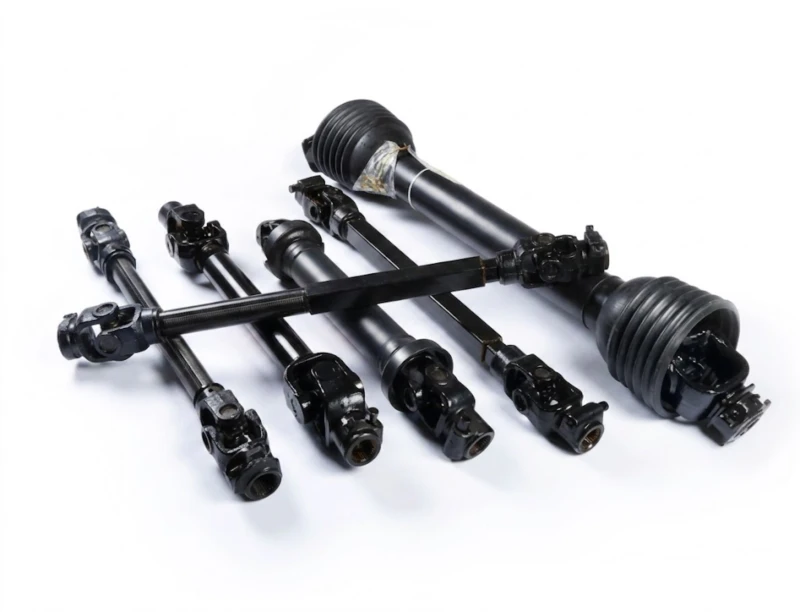
Choosing baling as the cotton stalk management method requires equipment that standard forage balers cannot provide. The specific requirements of cotton stalk direct-cut baling — standing crop geometry, high lignin compression resistance, disc cutting header power demand — are met only by a purpose-designed direct-cut baler system as covered in earlier articles in this series. The EP-9YDM-1.4 with its 5.4 m disc cutting header and dedicated bale chamber is the correct tool for this application.
The PTO shaft for a cotton stalk direct-cut baler operates under demanding conditions that differ from standard forage baling in two important respects. First, the disc cutting header generates sudden high-torque spikes when blades encounter localised dense stalk clusters, root balls embedded in the soil surface, or occasional surface stones — events that are normal in cotton field conditions but represent peak torque events that the PTO shaft slip clutch must absorb without transmitting destructive force to either the tractor PTO gearbox or the baler input shaft. Second, cotton stalk baling typically occurs in hot, dry, dusty post-harvest conditions — an environment that accelerates PTO shaft universal joint cross-pin wear if lubrication intervals are not maintained. In these conditions, grease the PTO shaft cross-pins at every refuelling stop rather than at the standard daily interval.
Confirm the following before beginning a cotton stalk baling programme: tractor delivers minimum 210 hp at the PTO; PTO shaft is rated for the peak torque of the disc header and bale chamber combined load; slip clutch is correctly set and recently inspected; spare disc blades for the cutting header are on the machine; and a replacement PTO shaft universal joint cross-pin kit is in the toolbox. Cotton stalk baling stalls in the field when any of these preparation items is missing.
Economic Comparison and Decision Framework: Choosing the Right Method for Your Farm
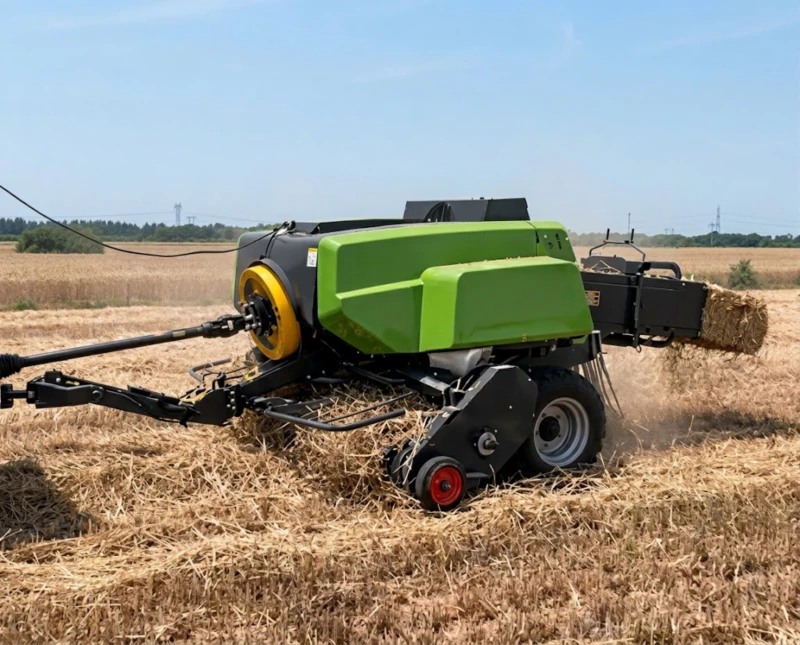
The following framework translates the agronomic and operational comparison into a practical economic decision tool. Adjust the cost and revenue figures to local market prices and field conditions.
| Cost / Benefit Item | Burning | Mulching | Baling |
|---|---|---|---|
| Direct mechanical cost (per ha) | Very low | Moderate (2–3 passes) | Moderate (1 pass) |
| Revenue from residue | None | None | Significant (biomass sale) |
| Net cost after revenue offset | Low (apparent) | Moderate | Low to zero (with market) |
| Regulatory fine risk | High and increasing | None | None |
| Carbon credit eligibility | Forfeited | Maintained | Maintained |
| Pest pressure next season | Partially reduced | Not reduced | Significantly reduced |
| Soil health long-term | Progressive decline | Maintained with N management | Neutral (with replacement C) |
| Sustainability certification | Incompatible | Compatible | Compatible |
The decision rule: Where a biomass market exists within economic haulage distance and the baling investment can be justified on volume (own operation or contractor model), baling is the dominant strategy — it delivers better pest management than mulching, better soil health outcomes than burning, regulatory compliance, and positive or neutral net economics from the biomass revenue offset. Where no biomass market exists locally, mulching with a nitrogen management plan is the appropriate burning alternative. Burning should be retained only where both mechanical options are genuinely unavailable — an increasingly rare situation as mechanical residue management equipment becomes more accessible globally.
Frequently Asked Questions
Does baling cotton stalks reduce the overwintering pink bollworm population better than burning?
Baling removes the stalk material that contains the largest proportion of overwintering pink bollworm larvae — the baled stalk physically exits the field and the larval population within it does not contribute to the following season’s infestation. Burning kills larvae in the above-ground stalk material but misses larvae that have diapauseed below the soil surface in the root zone, where fire does not penetrate effectively. Mulching incorporates stalk material into the soil, where larvae continue to develop in the warmer buried environment rather than being exposed to winter temperature extremes. Research from Pakistan’s cotton regions and China’s Xinjiang consistently shows that early stalk destruction by mechanical removal — of which baling is one method — combined with root-pulling or chopping, produces the lowest following-season first-generation pink bollworm infestation rates of any residue management approach.
What are the penalties for illegal cotton stalk burning in China, India, and Pakistan?
Regulations and penalties vary by region and change frequently, so always check current local requirements. As a general picture at the time of writing: in China, satellite-monitored fire detection systems in major agricultural provinces allow authorities to identify burning events and issue fines of several hundred to several thousand yuan per incident, with repeat offenders subject to subsidy disqualification. In India, the Supreme Court has mandated fines for stubble and residue burning across Punjab, Haryana, and Uttar Pradesh, with penalties indexed to farm size; farmers also risk losing agricultural subsidies under state programmes. In Pakistan, provincial environmental protection agencies issue fines and can require court appearances for repeat burning offences in areas near urban centres. The regulatory trend in all three countries is toward stricter enforcement and higher penalties, not relaxation — the economic case for non-burning alternatives is strengthening year by year as enforcement increases.
How do I compensate for the loss of organic matter when switching from mulching to baling?
The primary organic matter replacement strategies when switching from stalk incorporation to baling are: sowing a winter cover crop immediately after cotton harvest and before the following season’s planting (wheat, legumes, or a legume-grass mix), which adds carbon from root biomass and surface residue without the nitrogen immobilisation problem of high C:N stalk incorporation; applying composted organic matter at 2–5 tonnes per hectare in the year of switching to maintain organic carbon during the transition; and leaving the cotton root system in the soil after stalk removal — cotton roots contribute significant carbon and nitrogen as they decompose through winter, and their removal is not agronomically necessary. Over 3–5 seasons, a well-managed cover crop programme can maintain soil organic matter at levels equivalent to stalk incorporation, while delivering the pest management, regulatory, and economic benefits of stalk removal by baling.
Can I switch from burning to baling within one season or does it require multi-year planning?
The switch from burning to baling can be made within a single season from an equipment and operational perspective — the direct-cut baler is a single field pass that replaces the burning operation without requiring any additional field preparation. The planning required before switching is commercial, not agronomic: confirming access to a direct-cut baler (own, shared, or contractor); identifying a biomass buyer or bedding market for the baled material; and arranging any soil amendment to compensate for organic matter removal if the field has historically relied on stalk incorporation. The actual first-season transition is straightforward — harvest, then bale instead of burn. The multi-year commitment is to the soil organic matter replacement programme if mulching is being replaced, and to the biomass supply relationship if a formal contract has been entered with a biomass facility. Neither of these commitments prevents an immediate switch in the first season.
Conclusion: Baling Is the Post-Burning Strategy That Delivers Commercial and Agronomic Returns
The case against field burning of cotton stalks no longer rests on environmental ethics alone. It rests on a straightforward economic and risk calculation: the regulatory fine risk from burning is increasing annually; the carbon credit and sustainability certification value forfeited by burning is real and quantifiable; the soil health damage from burning is cumulative and ultimately expresses itself as yield decline and increased input cost. Burning’s apparent zero-cost is an illusion sustained only by not counting the costs that do not appear on this season’s invoice.
Between mulching and baling, the comparison favours baling wherever a biomass market exists — better pest management, comparable or lower net cost after revenue offset, and equivalent regulatory and carbon accounting outcomes. Where no biomass market is accessible, mulching is the correct alternative to burning, with a nitrogen management plan to address the C:N immobilisation issue. The emergence of direct-cut baler technology at an accessible price point is what makes baling a practical, not just theoretical, alternative to burning in smallholder and medium-scale cotton farming systems globally.
Direct-Cut Cotton Stalk Balers — Factory Direct from Balershay
We supply the EP-9YDM-1.4 direct-cut cotton stalk baler with 5.4 m disc cutting header — the purpose-built machine for post-harvest cotton field clearing and biomass baling operations. Visit balershay.com to explore our full baler range, or contact our team to discuss machine specification and baler availability for your cotton region.